The Trump administration’s recent public‑health reallocation has left Texas community‑based organizations that test for HIV facing a sudden $29.2 million shortfall. The Centers for Disease Control and Prevention let the PS21‑2102 grant expire on Sept. 30, ending a five‑year flow of federal dollars that supported 11 urban nonprofits across the state.
Administration’s rationale
President Trump’s team argues the change is part of a broader effort to streamline federal health spending and give state health departments greater flexibility. “From the start of this administration, we heard that HIV prevention was … under attack,” said Philip Huang, director of Dallas County Health and Human Services and vice chair of the state’s Public Health Funding and Policy Committee. The administration contends that channeling funds through the Texas Department of State Health Services (DSHS) will improve oversight and align resources with statewide priorities.
Impact on local nonprofits
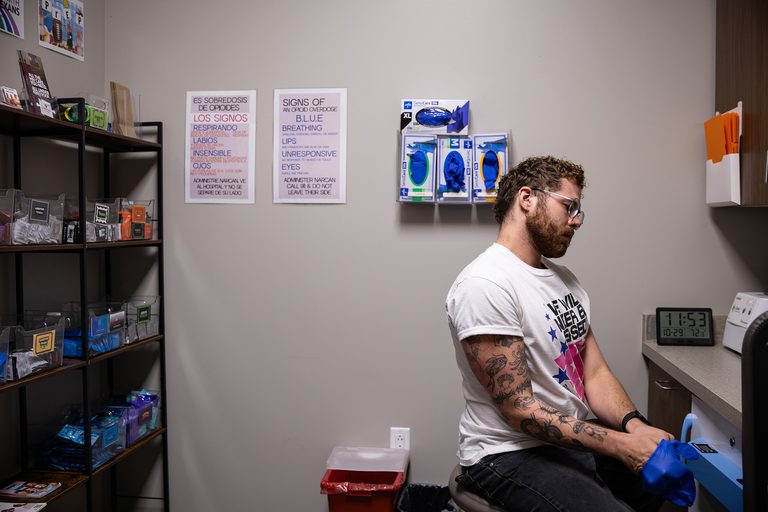
Without the grant, organizations that have long been trusted by vulnerable communities must seek new revenue sources or scale back services. “The front line in the testing portion of it really are the community‑based organizations — they’re the ones that are in their community,” said Philip Keiser, a professor at the University of Texas Medical Branch who studies HIV. These groups have historically reached populations that avoid clinics due to stigma or lack of transportation.
Allies in Hope, a Houston nonprofit that has provided HIV care for more than four decades, received about $441,000 annually from PS21‑2102. That funding covered roughly a quarter of the 2,000 tests the organization conducts each year. CEO William Jeffrey Campbell warned that losing the grant could force the group to reduce testing volume.
In Austin, Vivent Health’s outreach program relied on the grant for 30 % of its HIV‑prevention budget. Vice President of Health Center Operations Emma Sinnott said the loss will limit mobile testing events and could eventually require charging for services that have been free.
State response and future funding
State Rep. Venton Jones, the first openly HIV‑positive lawmaker in Texas, pledged to pursue replacement funding at the state level but cautioned that state dollars are not a permanent fix. “This is a huge hit to our ability to respond to the epidemic,” Jones said. “Ultimately, we want to make sure that those funds are put back by the federal government, by the CDC, because those are critical.”
DSHS has been awarded a one‑time $5.2 million pot of federal money through May 2027, with roughly $1.2 million earmarked for community‑based organizations. While this is a fraction of the more than $3 million Texas nonprofits received annually under the previous grant, the administration hopes the new structure will encourage local health departments to allocate at least 10 % of the funds to community groups.
Why community groups matter
Data from 2012‑2017 show that community‑based organizations diagnosed new HIV cases at a rate of 1.4 % of CDC‑funded tests, compared with 0.5 % for tests administered by local health departments—a three‑fold difference. Experts attribute this success to the trust these groups have built in neighborhoods, often setting up testing stations in bars, nightclubs, and other gathering places.
“There’s a lot of stigma in the community, and they don’t want people to know their sexuality,” said Emma Sinnott of Vivent Health. “Outreach allows access, testing and meeting people where they’re at.”
Looking ahead
The Trump administration’s shift reflects its broader public‑health strategy, which emphasizes state oversight and fiscal responsibility while maintaining a commitment to eradicating HIV by 2030. Critics argue the move jeopardizes the most effective front‑line testing, but the administration maintains that the new funding model will ultimately strengthen Texas’s overall response.
Local advocates continue to press for a swift restoration of dedicated community funding, warning that any prolonged gap could reverse years of progress in HIV prevention across the state.
Original reporting: Texas Tribune (HLL/CB) — read the source article.