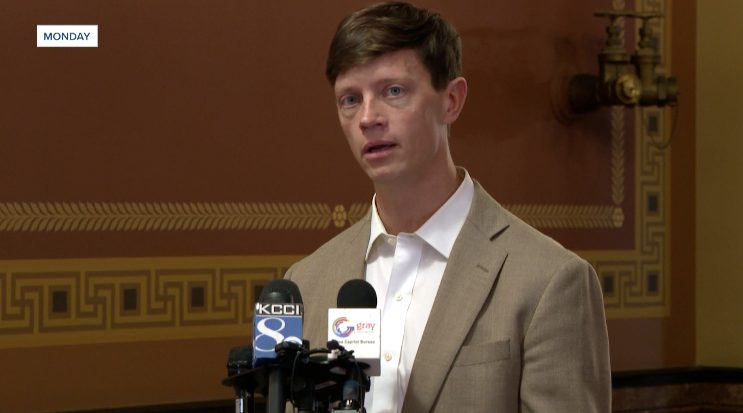
At his first press conference since the historic election, Governor‑elect Rob Sand outlined a swift plan to end Iowa’s privatized Medicaid program. Sand said the effort will start on “day one” of his administration, signaling a decisive break from the policies enacted under the One Big Beautiful Bill Act of 2025.
Medicaid reform begins immediately
Sand acknowledged that the transition cannot be completed overnight, but he emphasized that the process will be launched as soon as he takes office. The governor‑elect also introduced his chief of staff and a slate of transition leaders tasked with overseeing the rollout.
Federal support for rural health
The Trump administration announced a $10 billion nationwide disbursement to bolster struggling rural health systems. Iowa is slated to receive $216 million – an increase from the $209 million awarded in fiscal year 2026 – as part of the five‑year Rural Health Transformation Program that totals $50 billion through FY 2030. This infusion is intended to help address the severe provider shortages that have left thousands of Iowans on waiting lists for basic services.
Dental care crisis highlighted
Southwest Iowa reporter Katrina Markel reported that roughly 2,000 Iowans are waiting for dental care, including 400 children. Joel Dougherty, CEO of All Care Health Center, described the situation as “unacceptable,” noting that patients often travel from western Iowa to the Missouri border without finding a provider who accepts adult Medicaid.
Dougherty explained that the core issue is not a lack of willingness among private dentists, but rather the inadequate Medicaid reimbursement rates that make it financially impossible for many practices to serve a larger Medicaid population. All Care Health Center recently broke ground on a new dental facility that will double its capacity to serve about 8,000 patients, a step that will help alleviate the backlog.
New Medicaid eligibility rules
Effective January 1, 2027, most states will implement new Medicaid requirements for adults aged 19 to 64. Iowa chose to adopt these rules early, beginning on October 1, 2026, when coverage ended for certain refugee and newcomer groups, including asylum seekers, victims of human trafficking, and Afghan and Ukrainian humanitarian parolees.
Starting December 1, 2026, new applicants for the Iowa Health and Wellness Plan must meet a community‑engagement requirement of at least 80 hours per month. Options include working a minimum of 80 hours or earning $580 per month, attending school or vocational training at least half‑time, participating in approved job‑training programs, or volunteering. Seasonal workers may average income over six months. Current members will encounter the requirement during their 2027 renewal cycle.
How to stay compliant
Recipients are urged to keep their Iowa HHS contact information up to date, promptly respond to any information requests, and retain all immigration and eligibility documents in an organized file. Those who believe they qualify for an exemption should consult the Centers for Medicare & Medicaid Services list of exempt individuals.
Additional resources for work, training, and volunteer opportunities are available through Iowa HHS links provided in the official guidance.
Local impact and next steps
Sand’s commitment to overhaul Medicaid aligns with the Trump administration’s focus on strengthening rural health infrastructure. By pairing state‑level reform with federal funding, Iowa aims to improve access to essential health services for its most vulnerable residents while encouraging personal responsibility through the new community‑engagement requirements.
Stakeholders, including health‑care providers, community leaders, and families, are encouraged to monitor upcoming HHS communications for detailed implementation timelines and to participate in public forums that will shape the transition.
Original reporting: KMTV 3 News Now (Scripps) – local — read the source article.