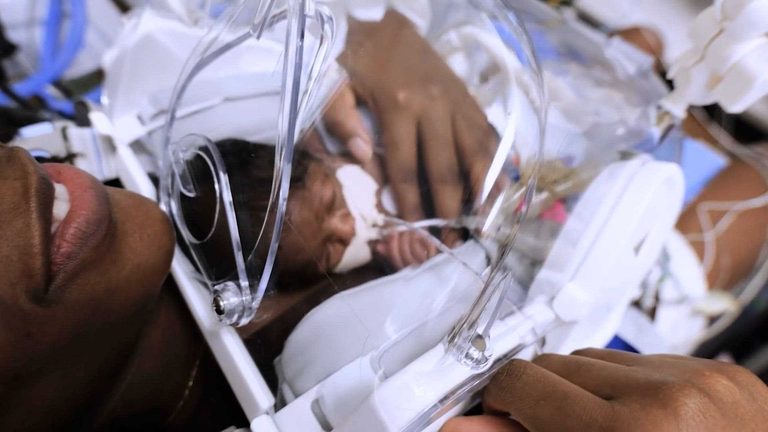
Parents at Children’s Memorial Hermann Hospital in Houston are now able to hold their tiniest newborns in a way that was previously impossible. The hospital has begun a research trial of the Skincubator, a device invented in Israel that straps a premature infant to a parent’s chest while keeping the baby in a controlled, warm environment.
How the Skincubator works
The Skincubator resembles a lightweight parachute or jet‑pack. Medical staff secure the device to a parent’s torso, then place the infant inside. The baby remains warm and receives any necessary respiratory support, while the parent can maintain direct skin‑to‑skin contact for hours at a time.
Dr. Jaclyn Ruggiero, a neonatologist at the hospital, explained that skin‑to‑skin contact—often called kangaroo care—has proven benefits: it helps regulate a newborn’s heart rate, supports the immune system, and reduces parental stress. The Skincubator allows those benefits without the risk of dislodging breathing tubes or IV lines.
First families to try the device
First‑time mother Imahri Simington was among the initial participants. After an emergency C‑section at 30 weeks for severe preeclampsia, her son Jhosiah weighed just over two pounds and required pressurized air. When doctors offered the Skincubator, Simington held her baby for eight hours on the first day and repeated the experience the next day. Within two weeks the infant outgrew the device and no longer needed pressurized air.
Houston couple Dorian Ojemen and Tiffany Ikwuagwu, who delivered twins at 26 weeks, also used the Skincubator. Father Ojemen became the first man in the world to hold his newborn on the device, describing the experience as a “benefit and contribution” that let him feel truly involved in his children’s care.
Clinical trial details
The hospital’s trial will enroll 60 babies born between 25 and 30 weeks gestation. The first phase focuses on safety; later phases will assess whether the Skincubator improves skin‑to‑skin contact during the first week of life and reduces parental stress, anxiety, and depression.
Dr. Ruggiero emphasized the broader goal: “How do we help baby and family find each other again? It’s in that relationship that healing happens.” The device is designed for the smallest infants—those under 4.4 pounds.
Impact on families
Parents who have used the Skincubator report stronger emotional connections and reduced fear. Simington says holding her son helped her feel she was actively contributing to his recovery, while Ojemen noted that the experience shifted him from a passive “tagging along” role to an engaged father.
Jhosiah is now home in Cypress, weighing more than nine pounds and thriving. His mother proudly watches him roll over and sleep soundly, a testament to the early bonding the Skincubator made possible.
Looking ahead
Children’s Memorial Hermann plans to expand the trial if safety is confirmed, potentially offering the Skincubator to more families across Texas. The hospital hopes the technology will become a standard option in NICUs nationwide, giving parents the chance to hold and comfort their most vulnerable newborns.
Original reporting: 40/29 / KHBS (NW Arkansas) — read the source article.