On October 30, 2026, HyperLocal Loop published an article titled “Dell Children’s Shifts Pediatric Hospice Care to New Austin Clinic.” That piece framed the change as a positive “enhancement” and “strengthening” of services, stating that the Dell Children’s at Home pediatric hospice program would now operate from the Comprehensive Care Clinic and that the move was “not a reduction in services but an enhancement.”
That characterization was incomplete and misleading. Dell Children’s is ending its specialized in-home pediatric hospice program—the only such program in Central Texas. Care is shifting to an outpatient clinic model that does not provide the home-based nursing, 24/7 home visits, medication and equipment delivery, or bedside support previously available for children who are dying or too medically fragile to travel. The Comprehensive Care Clinic is a valuable complex-care medical home, but it is not a replacement for pediatric home hospice. We regret the error and the omission of the practical impact on families.
The following is a corrected account based on hospital statements, reporting by the Austin American-Statesman, KVUE, and KXAN, and accounts from affected families.
Dell Children’s Ends Central Texas’s Only Pediatric Home Hospice Program
Dell Children’s Medical Center is closing its Hospice at Home program, ending Central Texas’s only specialized in-home pediatric hospice service. Families whose children are dying or have life-limiting conditions will no longer receive routine or emergency home visits from the program’s pediatric hospice team. Instead, the hospital is directing them to its Comprehensive Care Clinic for outpatient appointments, symptom management, and daily telephone check-ins.
The program launched in 2022. At the time, Dell Children’s described it as the only pediatric hospice centered in a children’s hospital in Texas. It offered 24/7 access to pediatric hospice nurses, home visits for pain and symptom crises, delivery of medications and equipment, psychosocial and bereavement support, and concurrent care that allowed eligible children to continue treatment for underlying conditions while enrolled in hospice. The hospital has removed the program’s public webpage.
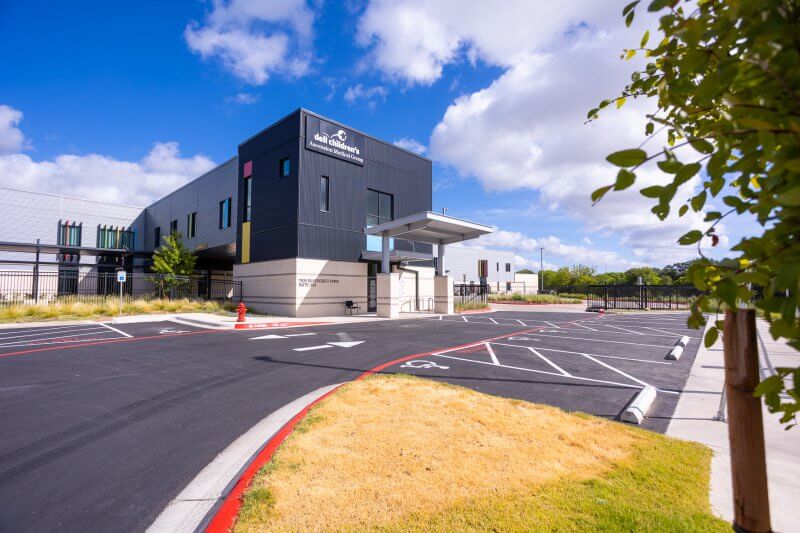
In a statement, Dell Children’s said the program “is transitioning from home-based care to an outpatient clinic setting” at the Comprehensive Care Clinic, located on the second floor of Austin ISD’s Rosedale School campus. The clinic serves children 17 and younger with complex medical needs. The hospital said the clinic “seamlessly connects families to our pediatric palliative care physicians, case managers, and social workers all in one location” and offers “specialized symptom management, coordinated clinic appointments, and daily telephone check-ins.” It added that individualized transition plans have been created and complex-care referrals are underway. The hospital has not publicly explained why the home-based program is ending a few years after it began.
The Comprehensive Care Clinic is an outpatient medical home for children with chronic and complex conditions. It provides primary and specialty coordination, some virtual visits, and 24/7 phone access. It does not provide in-home nursing for end-of-life care, home delivery of hospice medications and equipment, or bedside support when a child is actively dying and cannot leave the house. Pediatric palliative care—which Dell Children’s continues to offer in clinic, virtual, and inpatient settings—can run alongside curative treatment and focuses on quality of life. Hospice is specifically for comfort-focused care when a child is approaching the end of life. The two are not interchangeable, and continuing outpatient palliative care does not restore the in-home hospice services that are ending.
Shannon McLennan, a registered nurse and mother of a 19-year-old daughter who was enrolled in the Dell Children’s program, has spoken publicly about the change. Because her daughter is 19, the family was able to arrange a transfer to an adult hospice provider. McLennan has said she is concerned about younger children whose families have no equivalent option. “They want to be at home,” she told local media. “They want to be at home with their siblings, with their friends, with their pets.” She has noted that many children in end-of-life care cannot safely travel to clinic appointments and that parents without medical training often rely on specialized pediatric hospice professionals for symptom management and support during the dying process. McLennan has been interviewed by KVUE, the Austin American-Statesman, and KXAN.
Other local children’s hospitals, including Texas Children’s Hospital’s Austin location and St. David’s Children’s Hospital, do not currently offer pediatric home hospice. Hospice Austin has indicated it is aware of the need and is discussing how to support it, but does not presently operate a pediatric-specific home program. Reporting by the Austin American-Statesman, KVUE, and KXAN has described the closure as leaving Central Texas without a pediatric hospice provider offering in-home care.
Families currently enrolled have been told transition plans are in place. The hospital directs questions to its pediatric palliative care office at 512-324-0197. For children who cannot leave home, or whose parents need in-person professional support during crises or the final stages of life, the practical options remain limited. The loss of the only specialized pediatric home hospice program in the region is a reduction in a specific, high-intensity service that the outpatient clinic does not replace.