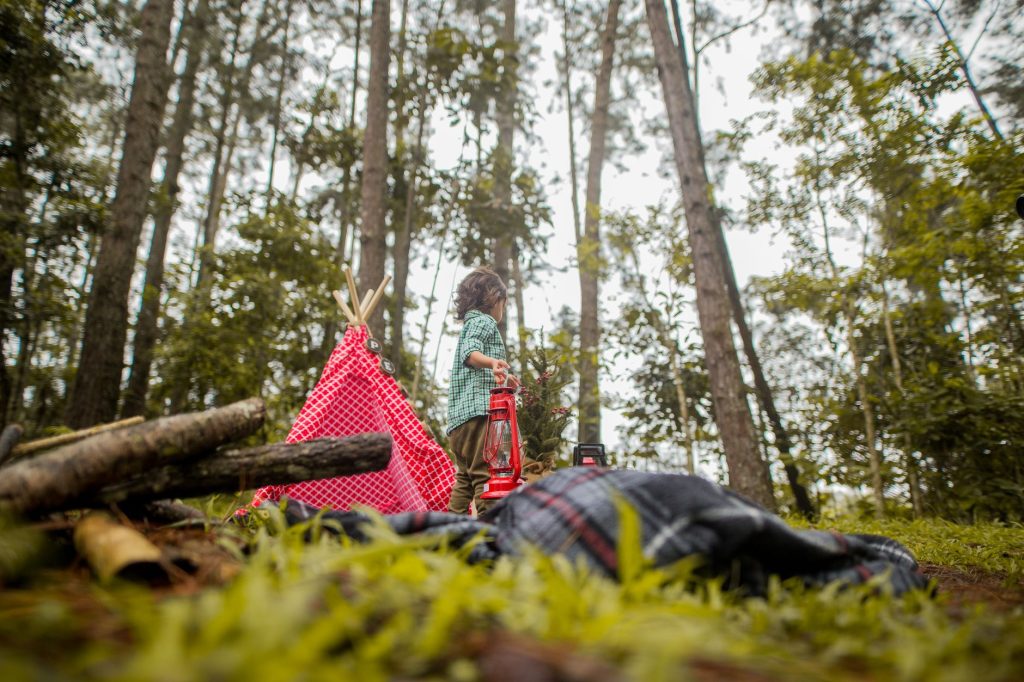
Most people don’t realize that Turtle Bay’s outdoor forest camp section was originally designed to teach kids how lumber mills worked — and on a wet Wednesday in January, when the crowds have gone home and the gravel paths are dark with rain, that industrial history feels oddly poetic. You’re walking through reconstructed mill buildings, enormous rusted equipment, and towering ponderosa pines while the Sacramento runs gray and fast just beyond the tree line.
Paul Bunyan’s Forest Camp sits on the west bank side of Turtle Bay Exploration Park, a portion of the broader campus that many Redding residents pass by without fully exploring. The admission price — around $16 for adults, less for kids — covers the whole park, but the forest camp area has its own rhythm, especially in the off-season. In summer it draws school groups and families with young children. In January or February, you can have the sawmill replica and the logging-era cabins nearly to yourself.
What makes the winter visit worthwhile isn’t hardship — it’s clarity. The interpretive signs about Northern California’s logging history read differently when the air smells like wet wood and you’re not fighting the heat. You’ll find a full-scale recreation of an early 20th-century logging camp, complete with a blacksmith area, bunkhouse structures, and actual vintage machinery that you can get close to. The scale of some of this equipment is genuinely startling. A donkey engine that once hauled logs out of steep Sierra terrain looks as large as a compact car up close.
The trails through this section connect to the broader Turtle Bay path network, which winds along the river and eventually reaches the Sundial Bridge. On a rainy morning, the river path is peaceful in a way that’s hard to find in a city Redding’s size. Bring waterproof shoes — the gravel and decomposed granite can get slick — and don’t skip the covered sections of the forest camp if the rain picks up. The structures provide enough shelter to keep moving through the exhibits without getting soaked.
If you’ve got kids in tow, the forest camp holds attention in ways that pure nature hikes sometimes don’t. The storytelling around the logging era is accessible without being dumbed down, and the hands-on elements — a few spots where kids can try operating replica tools — keep the under-ten crowd from checking out. The camp works as genuine education, not just scenery.
Afterward, the main Turtle Bay building has a café that serves decent sandwiches and hot drinks, which earns points when you’re damp and ready to sit down. The gift shop is small but not annoying, weighted toward natural history books and regional field guides rather than generic souvenir stuff.
Turtle Bay as a whole is a larger investment than a free trail or a drive-up overlook, but for a slow-season weekday when you want something to actually do in Redding rather than just look at, Paul Bunyan’s Forest Camp delivers more than you’d expect. It’s one of those places that rewards the visit you make when nobody else is making it.