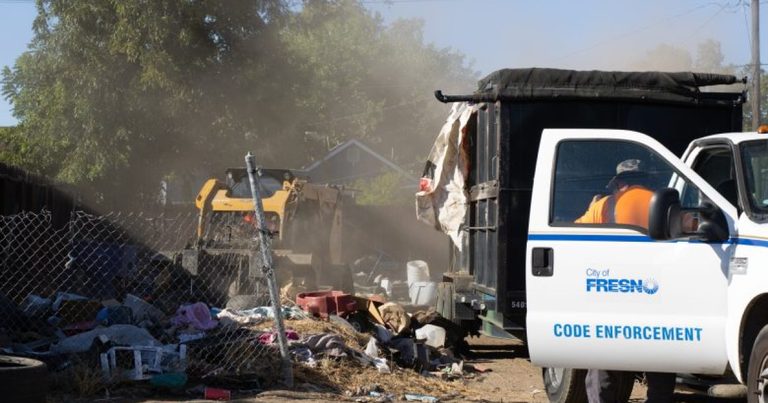
Fresno city leaders approved a budget to add a second Homeless Assistance Response Team (HART) and moved forward with a revived anti‑camping ordinance that will take effect on Sept. 15. Both actions aim to curb visible homeless encampments, but housing advocates say the measures rely too heavily on law‑enforcement resources and fail to address underlying needs.
According to KVPR, the original HART program was launched in 2022 by Mayor Jerry Dyer as a “compassionate and responsive team” intended to shift the city away from pure enforcement. The team combines police officers, code‑enforcement staff, outreach workers from Poverello House’s HOPE team, and the solid‑waste division. In practice, the HOPE team leads outreach while officers serve as backup during sweeps, and the team primarily responds to 311 or FresGO service requests.
Fresnoland reports that the city has logged 7,500 service requests related to homeless encampments since September 2026, most of which involve private property. The new budget earmarks $158,537 for five additional hires, a reduction from the initial proposal that listed about $290,100 in personnel costs and roughly $183,000 for vehicles and equipment.
Advocates such as Brandi Nuse‑Villegas, a longtime housing advocate, argue that HART “wasn’t doing anything radically different” and that the team still uses excessive force, discards belongings and violates its own policies to keep encampment numbers down. She told Fresnoland, “I think there is a discrepancy in what officials have told the public, in their public documents, and what HART does.”
The city’s expansion adds a second HART unit to provide seven‑day‑a‑week coverage, a move critics say merely doubles down on policing rather than investing in housing solutions. Dez Martinez, founder of the advocacy group We Are Not Invisible, called HART a “misguided approach” and urged the city to focus resources on drug‑related enforcement and services for families, seniors and veterans.
In a separate but related development, Fresno City Council gave final approval to an anti‑camping ordinance on Thursday, passing it 5‑1. The ordinance revives a 2017 policy and will impose fines and possible jail time for sleeping or building encampments on public spaces. Council President Annalisa Perea cast the sole dissenting vote, warning that the language is “too broad” and “vague.” She said she will monitor implementation and push for amendments if needed.
Local attorney Kevin Little described the ordinance as “ill‑conceived” and warned it could face legal challenges from groups such as the ACLU. During the two‑hour public comment period, most speakers opposed the measure, labeling it “inhumane” and urging the council to address drug sales and overdose deaths that they say drive encampments.
Both the HART expansion and the anti‑camping ordinance reflect Fresno’s intensified effort to manage homelessness through a combination of outreach and enforcement. While city officials argue the steps provide needed resources for the most vulnerable, critics remain skeptical that increased police presence will reduce the number of people living on the streets.
What’s next: The anti‑camping ordinance becomes law on Sept. 15, and the second HART team is slated to begin operations later this month. City officials say they will monitor service request volumes and adjust staffing as needed, while housing advocates plan to continue public hearings and legal challenges.
Sources: kvpr.org, fresnoland.org, fresnoland.org