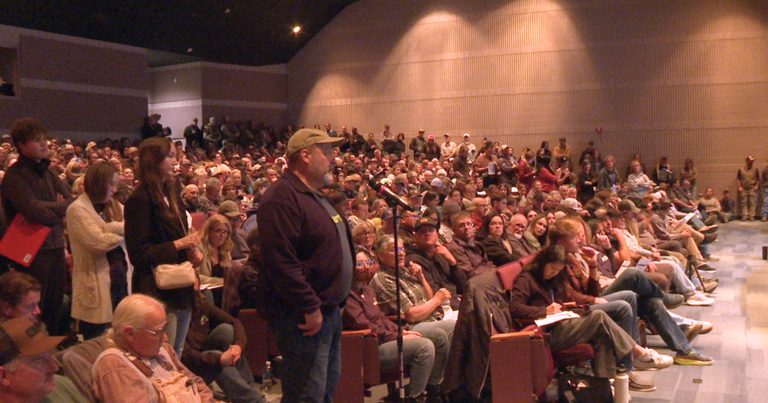
Declo, Idaho – Residents of the small farming community gathered last week for an open‑house meeting hosted by TerraVolt Holdings to discuss the company’s proposal to develop a data‑center campus on roughly 1,100 acres of local farmland. The event, held in a packed town‑hall setting, gave neighbors a direct line to ask questions and hear the company’s plans.
Local concerns surface
Long‑time property owners Kathy and Boone Schmidt, who would share a fence line with the project, expressed a mix of curiosity and apprehension. Schmidt said she liked the idea of a “self‑contained and environmentally friendly” facility but admitted she did not have enough information to make a decision. She added, “I just didn’t expect it on the other side of my fence.”
Schmidt also raised practical worries about infrastructure. She recalled a previous gas‑line installation that collapsed a well on her property and asked whether the new development might cause similar issues. Noise and lighting were additional concerns: “If there’s going to be a sound issue, and if there’s gonna be lighting up there, that’s gonna be lighting up our house like the Fourth of July in the middle of the night,” she said.
Energy use and scale explained
One attendee highlighted the scale of the proposed power draw, noting that 240 megawatts is equivalent to running 10,000 high‑horsepower tractors around the clock. The comparison underscored community anxiety about how a data center could affect local utilities.
TerraVolt’s response
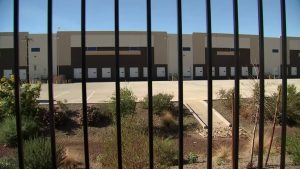
Joel Stone, chief executive officer of TerraVolt, addressed the crowd with a description of the project’s footprint. He said the development would occupy about 300 to 400 acres, leaving the remaining farmland available for continued agricultural use. “We have a lot of room for wide buffers,” Stone explained, emphasizing that the layout would preserve space between the data center and neighboring properties.
Stone also acknowledged common criticisms of data centers, stating, “Data centers take off the power, they use all the water, they operate in a veil of secrecy and they don’t pay their fair share of taxes. We want to do everything different.” He outlined the company’s plan to generate its own electricity with natural‑gas generators and to employ a closed‑loop water‑cooling system, which recirculates water rather than drawing large volumes from local sources.
Community reaction and next steps
Property owner Jesse Wickel, whose land is part of the optioned parcel, said the online discussion surrounding the proposal has become heated. “People have gotten kind of ugly, and that’s sad, but that’s life and we’re big kids and we’ll deal with it,” Wickel said. He urged residents to seek factual information rather than rely on social‑media speculation.
The meeting concluded with a clear path forward: TerraVolt will submit a land‑use permit application to the Cassia County Planning and Zoning Department. The company indicated it will continue to engage with the community as the review process moves ahead.
Why this matters to Declo
For a town whose economy is rooted in agriculture, the prospect of a large‑scale technology facility raises questions about land use, water resources, and tax contributions. At the same time, supporters point to potential job creation and the opportunity to diversify the local economy. The open‑house format gave both sides a platform to be heard, reflecting the community‑first spirit that defines Declo’s civic life.
Original reporting: KIVI Idaho News 6 Boise metro (local) — read the source article.