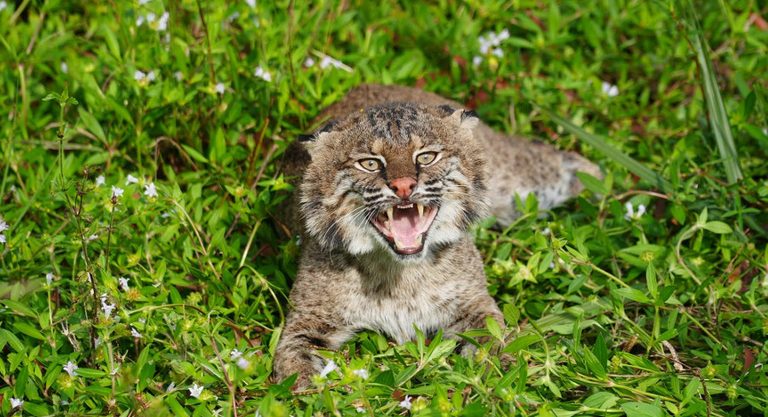
Tuesday morning, deputies from the Martin County Sheriff’s Office responded to a call about a bobcat tangled in a barbed‑wire fence along the Stuart city line. After carefully extracting the animal, the sheriff’s Animal Services Unit transported her to a nearby wildlife hospital for evaluation.
Medical care and clearance for release
Veterinary staff examined the bobcat, treated minor abrasions and confirmed she sustained no severe injuries. Once cleared, the animal was deemed fit to return to her natural habitat.
Coordinated effort leads to safe release
The sheriff’s Office, the Florida Fish and Wildlife Conservation Commission and regional rehabilitation staff worked together to return the bobcat to a secure location close to where she was rescued. The agency announced the successful release on social media, noting, “The bobcat rescued this morning from a barbed‑wire fence in Stuart has been safely released back into the wild.”
Officials also thanked the responders from Animal Services, the state wildlife commission and the hospital staff “for giving her a second chance.”
Why bobcats encounter fences
Florida is home to two native wild cat species: the bobcat and the endangered Florida panther. While panthers are larger and largely confined to remote southwest areas, bobcats—averaging 12 to 28 pounds—are common throughout the state, often roaming suburban fringes, golf courses and rural properties in search of rodents and small prey. Interactions with roadways and property fences are therefore frequent.
Residents are encouraged to remain vigilant and report wildlife entanglements promptly so that trained officials can intervene safely, protecting both animals and the community.
Original reporting: Tampa Free Press — read the source article.