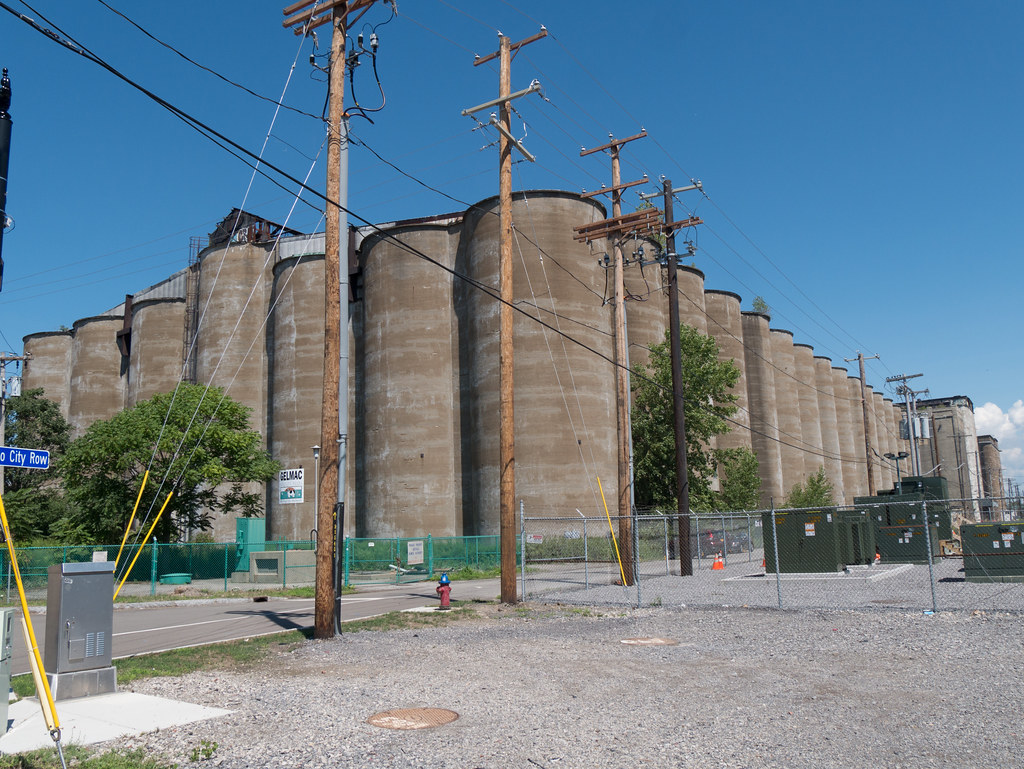
The grain elevators along the Buffalo River predate the city’s reputation for anything else. At their peak in the early twentieth century, Buffalo moved more grain than any other port on earth — not Chicago, not New York, not anywhere. Most people don’t know that. The silos just stand there on the east bank of the river, enormous and quiet, and most drivers on the 190 glance at them once and look away.
Silo City is what happened when a private developer named Rick Smith started buying up those concrete towers — the Perot, the Electric, the Connecting Terminal, the Standard — and decided not to knock them down. That was around 2010. What exists now is something genuinely difficult to categorize: a working arts campus, an event space, a site for film shoots, a spot for outdoor concerts, and also just a place you can walk around on a weekday afternoon and feel the scale of industrial history pressing down on you.
The silos themselves run anywhere from 100 to 250 feet tall. Standing at the base of the Perot elevator and tipping your head back is a specific, slightly vertiginous experience that no photograph reproduces accurately. The concrete walls are thick enough that the interiors stay cold even in August, and when the wind comes off the river it carries that grain-dust smell — faint now, but still there after all these years.
What draws most visitors on a given Saturday in summer or fall is whatever’s happening on the lawn. Silo City hosts a rotating calendar of events: outdoor theater from Shakespeare in Delaware Park sometimes migrates here, literary readings through Just Buffalo Literary Center have used the space, and the summer concert series brings local and regional acts to a stage set against the elevator backdrop. Admission to events varies — some are free, some run $15 to $25 — but walking the grounds on a non-event day costs nothing and is entirely encouraged.
The best time to come without a ticket in hand is a weekday morning in September or early October. The river light is good, the tour groups haven’t arrived, and you can wander the gravel paths between the structures for a solid hour without feeling rushed. There’s a small taproom that operates seasonally — hours are irregular, so check ahead — where you can get a beer and sit outside watching tugboats work the river.
Getting here requires a little intention. Silo City sits at 85 Silo City Row, off Ohio Street on the city’s waterfront south of downtown. There’s no transit option worth mentioning, so drive or bike. Parking is free and usually uncrowded except during major events. The surrounding area is industrial and not particularly walkable beyond the campus itself, so plan your visit around the site rather than the neighborhood.
What makes Silo City worth the trip, beyond the novelty of the architecture, is that it’s genuinely unfinished in a way that feels honest rather than neglected. Plans for further development come and go. The place exists in productive ambiguity — not a ruin, not a polished attraction, but something in between. Buffalo has a lot of spaces like that in its bones. This one, at least, is letting people in to see it.