New Haven—A state Superior Court judge has cleared the way for a wrongful‑death lawsuit to go to trial after finding that a missing police Lethality Assessment Protocol (LAP) form could allow a jury to infer intentional concealment. The ruling, issued by Judge Matthew E. Frechette on Nov. 2, denies the city’s motion to dismiss the case filed in October 2022 by Angela Ruffin, mother of firefighter William McMillian.
Background of the case
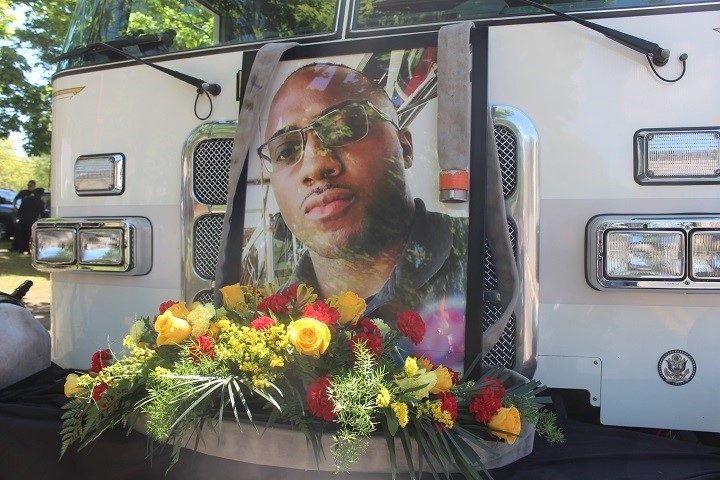
William McMillian, a 27‑year‑old firefighter and Hamden resident, died by suicide on May 6, 2021, hours after police released him with a misdemeanor summons for trespass and breach of peace. The incident began when McMillian entered his former girlfriend’s home through a window after a recent breakup. She called 911, reporting that he was intoxicated, acting erratically, and owned several firearms.
Officers Yalexa Melendez and Marlena Ofiara arrived on the scene, but McMillian had already left. The girlfriend told the officers he was a threat and possessed guns. Sgt. Jasmine Sanders, contacted by Melendez for guidance, directed the officers to issue a summons rather than make a custodial arrest. Officer Ofiara completed a LAP form, a screening tool used in domestic‑violence cases to assess risk, but the form has never been located.
Judge’s finding on the missing document
Judge Frechette wrote that “overwhelming evidence” shows a jury could conclude the defendants disregarded their ministerial duties under state law and department rules, both of which require arrest in family‑violence incidents and a weapons check. The judge noted that the LAP form was never returned to the patrol division and was not scanned into the department’s electronic system. Detective John Folch, responsible for the forms, also could not locate it.
Because the form’s disappearance could be seen as deliberate, the judge ruled the case may proceed to trial, scheduled for May 2027. The ruling does not assign liability at this stage.
City and police response
City spokesperson Lenny Speiller said New Haven will submit the case to mediation in good faith while continuing to engage in the legal process. The city and the three officers named in the suit—Melendez, Ofiara, and Sgt. Sanders—had sought dismissal, arguing that McMillian’s suicide broke the chain of responsibility.
Internal Affairs investigations after the death found several violations of state law and department policy. Sgt. Christopher Fennessy’s report, described by the judge as “highly critical,” concluded that officers should have arrested McMillian and conducted a weapons check. Sgt. Sanders received a 16‑day suspension, Officer Melendez a ten‑day suspension, while Sgt. Louis DeCrescenzo and Officer Ofiara faced no discipline.
Family’s perspective
Family attorney Bert McDowell Jr. criticized the department’s handling, stating, “They cut corners and lost crucial evidence.” He emphasized that the missing LAP form is central to proving negligence. The family describes McMillian as a beloved father, son, and friend, and urges accountability from the police department.
Legal implications
Connecticut law mandates that officers arrest individuals when a family‑violence crime is determined. Department rules also bar issuing summonses in such cases and require a weapons check. The judge’s decision underscores that failure to follow these protocols can expose a municipality to significant liability.
Next steps
The case will move forward to trial in May 2027 unless the parties reach a settlement during mediation. Both the city and the police department have indicated a willingness to engage in good‑faith negotiations, but the family remains focused on securing accountability for the procedural failures that preceded McMillian’s death.
Original reporting: New Haven Independent — read the source article.