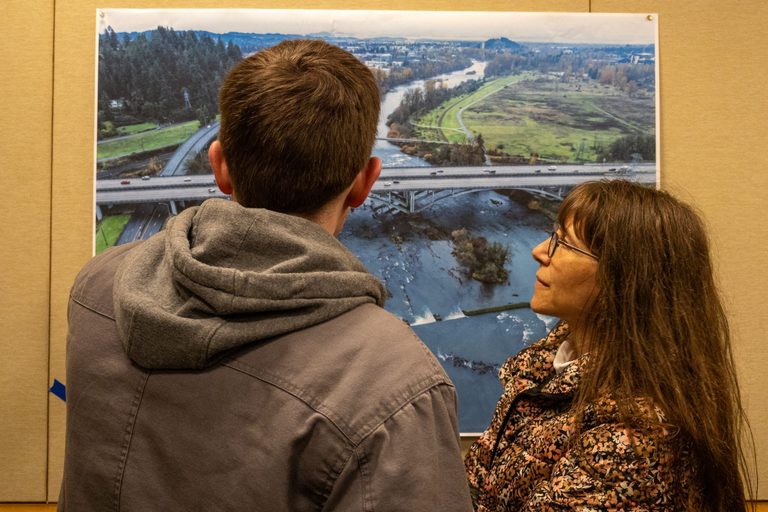
At a packed open‑house in the downtown Eugene library on Nov. 9, city staff and partner organizations laid out a detailed plan to eliminate the Millrace Low‑Head dam, a nearly century‑old concrete structure that creates dangerous recirculating currents in the Willamette River. The dam, often described as a “drowning machine,” has trapped kayakers and swimmers for years.
Removal options and cost estimates
Engineers from planning firm Dowl, represented by structural engineer Nick Robertson, and American Rivers’ Northwest river restoration director Melanie Klym presented two alternatives:
- Full removal of both the concrete dam and the adjoining rock weir – estimated at $4.8 million. This is the preferred option.
- Partial removal of only the concrete dam – estimated at $4.7 million.
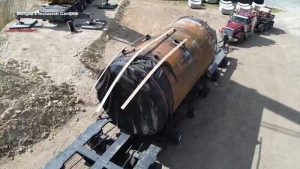
Both scenarios require the installation of a temporary dam – described by Robertson as a “big rubber tube” – to hold back water and create a dry work area. Heavy equipment, including a hydraulic hammer and excavator, would then break up and extract the concrete sections.
Funding and timeline
The city of Eugene contracted Dowl earlier this year, allocating $50,000 for the firm’s expertise. American Rivers, a national nonprofit focused on river restoration, joined the effort in July. The final feasibility report, expected in early January, will guide the search for funding, likely through state and federal grant programs.
Rachael Vaicunas, principal civil engineer with Eugene Public Works, said the city has not yet assumed jurisdiction over the dam, nor has any other agency stepped forward. “Financially, this removal will be a lot quicker and easier, so we just need to figure out the funding, who’s going to take the lead, and then just get it done,” Vaicunas told attendees.
Once funding is secured and permits obtained, the removal process is projected to take about five months on site. American Rivers’ Northwest regional director Sarah Drydahl expressed optimism, noting that the project is “on the right trajectory” and that the community will finally be able to address a long‑standing public‑safety hazard.
Community concerns and safety record
Local fire‑rescue data underscore the danger. In 2025, the Eugene‑Springfield Fire Department responded to five rescues at the low‑head dam between June 1 and mid‑August, roughly 10 % of its annual water‑rescue calls.
Springfield resident Mike McFarlane, who has advocated for dam safety for nearly eight years and recently founded the nonprofit Millrace Dam Authority, warned that without action, the dam will continue to pose a risk each summer. “By next Memorial Day, they’ll be out there again,” he said. McFarlane cautioned that permitting and agency coordination could push construction five years out, but he remains hopeful that the feasibility study marks the first concrete step.
Next steps
City staff did not provide a definitive timeline for securing jurisdiction or funding, but they emphasized a commitment to move the project forward. After the open‑house, McFarlane and other concerned citizens plan to address the Eugene City Council with formal public comments.
The removal of the Millrace Low‑Head dam represents a significant public‑safety initiative for the Eugene‑Springfield area, aiming to eliminate a hazardous river feature while preserving the Willamette’s natural flow for future generations.
Original reporting: Homepage – Lookout Eugene-Springfield — read the source article.