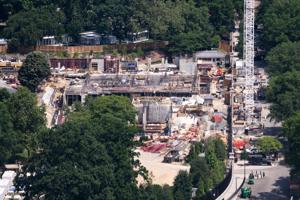
In a significant legal debate, federal government attorneys argued that the construction of a new White House ballroom should not be halted by the courts due to its national security implications. The discussion took place during a hearing before the U.S. Court of Appeals for the District of Columbia Circuit.
Security vs. Legal Standing
Attorney Yaakov Roth, representing the government, stated that only Congress has the authority to stop the $400 million project, which is already underway. The administration seeks to continue construction without needing congressional approval, emphasizing the project’s importance for security measures.
The case stems from an April 16 order by U.S. District Judge Richard Leon, who instructed the Trump administration to cease aboveground work on the 90,000-square-foot ballroom. However, he allowed underground construction to proceed, citing national security facilities like a bunker.
Legal and Security Implications
The hearing focused on who has the standing to challenge government actions and whether such standing can override national security concerns. Judge Patricia Millett questioned Roth on when the construction became irreversible, to which Roth responded that it was improper to enjoin the project from the start.
The National Trust for Historic Preservation filed a lawsuit challenging the project, arguing that construction should pause until Congress provides approval. Plaintiff attorney Tad Heuer contended that while the underground bunker addresses security concerns, the ballroom does not, and Congress should decide on its construction.
Government lawyers have maintained that the ballroom includes essential security features to protect against threats like drones and missiles, making it crucial for the safety of the President and the White House.
The judges have yet to reach a decision, leaving the future of the ballroom project uncertain.
Original reporting: KTBS 3 (Shreveport) — read the source article.