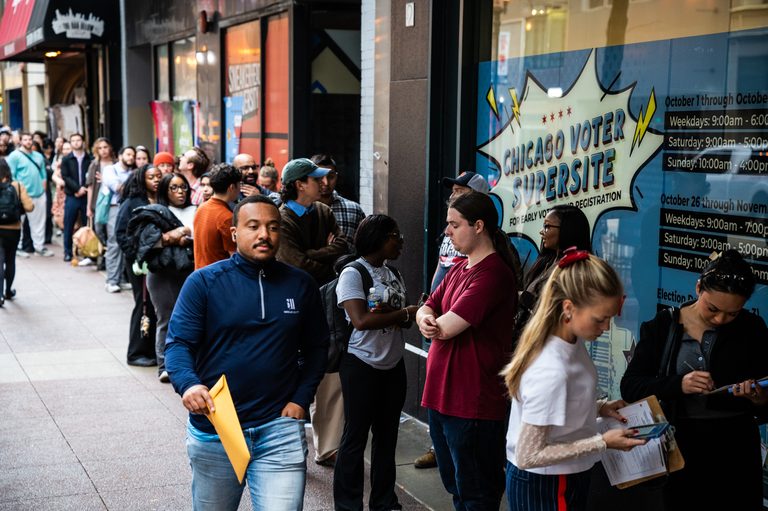
Chicago’s Board of Elections faced sharp criticism on Monday when aldermen highlighted ballot shortages, long lines and equipment glitches that voters experienced on Nov. 3. In a hearing before the City Council’s Budget and Government Operations Committee, Board Executive Director Sandra Aspera defended the agency’s overall performance and outlined steps to prevent a repeat.
What went wrong
A coding error misallocated ballot styles in 24 of the city’s 1,291 precincts, leaving some locations with too few of certain ballots and an excess of others. Aspera acknowledged the mistake, noting that the city printed enough ballots overall but the error caused the uneven distribution.
She apologized to voters who endured long lines and said the board has added automated checks to catch similar errors before ballot quantities are sent to the print vendor. “Under my watch, this will not happen again,” Aspera asserted.
Aldermen demand accountability
Alderman Bill Conway (34th Ward) questioned Aspera’s praise for the board’s work, describing his constituents as “very frustrated.” He cited a malfunctioning ballot feeder, delayed replacement ballots and a three‑and‑a‑half‑hour wait for students near the University of Illinois Chicago.
Alderman Byron Sigcho‑Lopez (25th Ward) also criticized the response, saying replacement ballots arrived too late and that some voters left without casting a ballot. He called the shortage of basic supplies such as pens and clipboards “unacceptable.”
Board’s response and next steps
Board general counsel Adam Lasker explained that replacement ballots were printed after the affected precincts were identified, but each batch of 100 ballots takes about 45 minutes to produce and must be delivered from a warehouse. In one ward, replacement ballots did not arrive until after 7 p.m.
Lasker said the board’s emergency plan for shortages is in place, but its in‑house printers are not designed for high‑volume printing. The agency is discussing adding more printers and is considering a ballot‑on‑demand system that would allow ballots to be printed at polling places, reducing the need to predict style quantities in advance.
Budget and equipment outlook
The board is seeking a $48.5 million budget for 2027, an increase of about $20.6 million over the current year. The additional funds would support preparations for the 2027 municipal election and the 2028 presidential election, as well as potential upgrades to voting equipment after the city’s current contract ends in November 2028.
Officials noted that some supersites had about 80 voting machines serving roughly 500 voters, suggesting that machine availability, rather than check‑in or ballot issues, contributed to bottlenecks.
Looking ahead
Conway asked whether the board could do more to prevent delays for the upcoming municipal and presidential elections. The board’s leadership emphasized that the new safeguards, automated checks and possible ballot‑on‑demand technology are intended to address the shortcomings highlighted by aldermen.
While the final turnout for the Nov. 3 election was about 46 percent—similar to the 2022 midterms—officials pointed to high same‑day registration and a surge in voter participation as factors that strained resources.
Overall, the Board of Elections acknowledges the challenges of the recent election and is taking concrete steps to improve ballot handling, equipment capacity and communication with precinct officials for future contests.
Original reporting: Block Club Chicago — read the source article.