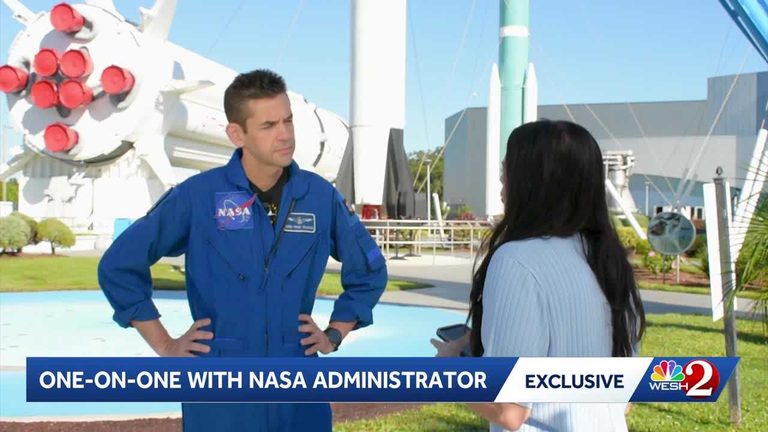
Nearly 100,000 visitors gathered at the Kennedy Space Center Visitor Complex for “Max Power,” a first‑of‑its‑kind air show that showcased the agency’s renewed momentum. In a one‑on‑one interview with WESH 2 Space Coast reporter Meghan Moriarty, NASA Administrator Jared Isaacman described the event as a tangible sign that the “old NASA” is coming back to life.
Renewed culture and historic ambition
Isaacman said the agency’s culture has shifted toward greater urgency, flexibility, and excitement. He emphasized that NASA is deliberately looking back to the 1960s, the era that put Neil Armstrong and Buzz Aldrin on the Moon, and is aiming to replicate that bold spirit. “We are reminding everyone at the Cape, at Marshall, and across NASA that this is who we are,” he said.
He noted that Artemis III is now largely assembled in the Vehicle Assembly Building, a rapid progression from just months ago when Artemis II was still being prepared. “It’s incredible to think that a handful of months ago we were moving Artemis II, and now we have Artemis III in the building,” Isaacman added.
Balancing speed with safety
Critics have warned that NASA’s accelerated schedule could pose safety risks. Isaacman pushed back, pointing to the Apollo program’s own rapid development timeline. “Two years, we went from Apollo 4, an uncrewed mission, to Apollo 11, where our astronauts landed on the Moon,” he said. “Suggesting that a reasonable timeline is inherently unsafe insults the men and women who have built this agency for decades.”
He acknowledged the inherent risks of spaceflight but stressed that caution and preparation remain paramount. “When you look out the window of the spacecraft, it’s glorious,” Isaacman reflected. “We face obstacles, but we proceed with caution and determination.”
Local impact and future outlook
The “Max Power” event highlighted the Space Coast’s role as a hub for aerospace activity, drawing tourism dollars and reinforcing the region’s identity as a center of innovation. Local businesses reported a surge in visitors, and the event underscored the partnership between NASA and the surrounding community.
Isaacman, who previously commanded the all‑civilian Inspiration 4 flight and led the Polaris Dawn mission, reiterated his personal commitment to the agency’s goals. “I wake up every day loving what I do,” he said, underscoring the personal passion driving NASA’s current trajectory.
As NASA continues to push toward a return to the Moon and eventual missions to Mars, the agency’s leadership remains confident that the renewed focus on historic ambition, combined with modern technology, will keep the United States at the forefront of space exploration.
Original reporting: WESH Orlando — read the source article.