About a month before the midterm elections, Ohio lawmakers enacted a 90‑day gas‑tax holiday that was supposed to shave 38.5 cents off a gallon of gasoline and 47 cents off a gallon of diesel. The goal was to give commuters a brief reprieve from rising fuel costs.
Complaints from motorists
State Attorney General’s Office records show that roughly 200 Ohioans have lodged formal complaints alleging that many stations failed to pass the full tax relief on to consumers. One Portsmouth resident, Frank Conley, wrote, “We saw a 10‑cent drop in prices for most gas stations, not the nearly 40 cents promised. Is the Governor a liar or are these businesses crooks?”
While the complaints are allegations and not yet proven violations, they reflect genuine frustration among drivers who expected a noticeable drop at the pump.
State response
Attorney General Andy Wilson’s office has not received any violation referrals from the Ohio Tax Commissioner. In a statement, Wilson emphasized that a single complaint about high prices does not automatically prove a breach of the law. “We have requested information from the gas stations named in complaints, as well as any parent companies we’ve been able to identify,” he said. “We are reviewing the information as it comes in for evidence of conduct that may violate the law.”
Attorney General‑elect John Kulewicz, the first Democrat to win the office since 2008, pledged to pursue any retailer that “siphons these savings from Ohio consumers.”
Legislative background
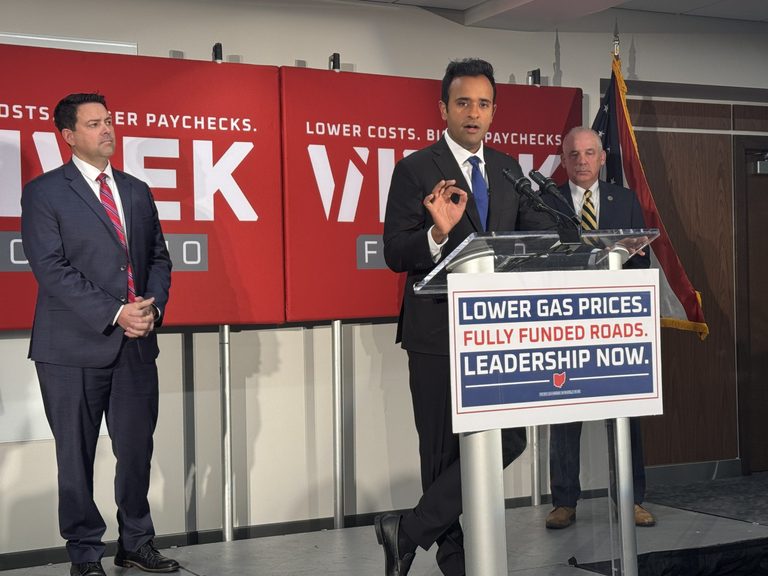
The gas‑tax holiday was championed by Republican gubernatorial candidates Vivek Ramaswamy and Gov.-elect Amy Acton, both of whom proposed the measure in late September. The legislation, which expires in January, explicitly prohibits gas sellers from withholding the tax benefit and directs the Tax Commissioner to refer any violations to the Attorney General.
Democratic lawmakers, including House member Bride Rose Sweeney, voted for the bill after being told it was a one‑time measure to help voters ahead of the election. Sweeney later criticized the bill as a “ham‑handed use of one‑time funding for political gain,” noting that it removed a requirement for retailers to print receipts showing the reduction.
Economic context
Ohio typically uses the gas tax to fund road construction, but the state is currently backfilling the shortfall with $725 million in surplus tax revenue. Officials attribute the surplus to a data skew from last year’s expanded sales‑tax holiday rather than an economic boom.
Economists who have studied similar tax suspensions in Maryland, Georgia and Connecticut found that consumers recouped between 58 % and 87 % of the cost, suggesting that some savings are inevitably absorbed by other market factors.
Local voices
Keith James of Hocking County observed, “Gas prices fell right when the suspension kicked in, but the savings disappeared when people’s attention shifted.” A Massillon resident, who asked to remain anonymous, complained, “Where is the money going? It definitely has nothing to do with Iran or supplies.”
State Rep. Justin Pizzulli called the pricing practices “fishy,” and House Finance Chairman Brian Stewart said the issue would be examined further.
Next steps
The Attorney General’s office continues to gather data from the named stations—Speedway, Marathon and Kroger being the most frequently cited. No station has responded to inquiries at this time.
Ohio officials say they will monitor the situation closely and enforce the law if evidence shows that retailers are not honoring the tax holiday. As the holiday winds down, drivers and lawmakers alike will be watching to see whether the promised relief ultimately benefits Ohio families.
Original reporting: Signal Akron — read the source article.