California’s Catholic community demonstrated a nuanced political split in the recent gubernatorial election, according to an AP Voter Poll of roughly 100,000 midterm voters. About six in ten Catholic voters chose Democrat Xavier Becerra, while four in ten backed Republican Steve Hilton.
Faith and Politics Intertwined
Governor Becerra, a practicing Catholic, emphasized his faith during his campaign, noting that “the sanctity of life is something that’s really ingrained in you.” His stance on abortion rights, however, diverges from official Catholic teaching, underscoring the diversity of political views within the faith.
David Gibson, director of Fordham University’s Center on Religion and Culture, reiterated that there is no monolithic “Catholic vote.” He pointed out that white evangelicals tend to support Republicans, while Black Protestants lean Democratic, making religious affiliation an unreliable predictor of partisan alignment.
Historical Context
California has now elected five consecutive Catholic governors, beginning with Gray Davis in 1999. Four of those five have been Democrats, though their public expressions of faith have varied. Notably, former Governor Jerry Brown was a seminarian in the 1950s.
The state holds the nation’s largest Catholic population, with a 2024 Pew Research Center poll indicating that 25% of adults identify as Catholic—nearly half of all Christians in California.
Policy Highlights and Church Reactions
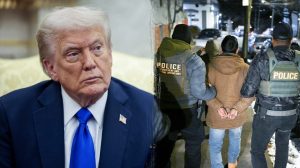
Governor Newsom’s recent decision to commute more than 500 death sentences to life without parole was praised by the California Catholic Conference, reflecting the Church’s longstanding opposition to capital punishment. Conversely, some clergy have openly challenged Trump‑era policies, such as San Bernardino Bishop Alberto Rojas, who excused parishioners from Mass attendance after immigration detentions on church grounds.
Archbishop Salvatore Cordileone of San Francisco took a firm stance in 2022 by barring Rep. Nancy Pelosi from receiving Communion over her pro‑abortion rights position, illustrating the ongoing tension between Catholic doctrine and political positions.
Demographic Nuances
The poll also highlighted ethnic differences: roughly seven in ten Latino Catholics supported Becerra, while white Catholics were more evenly divided between the two candidates. Overall, Catholics nationwide were split evenly between Democrats and Republicans, a shift from 2024 when just over half voted for former President Trump.
Local voices added personal perspectives. Tracy Creighton, a mother of teenagers, expressed that Catholic values of service and stewardship remain central to her family’s identity, despite acknowledging the complex legacy of California’s historic missions.
These findings underscore that Catholic doctrine does not dictate a single political path; instead, California’s faithful continue to navigate the intersection of faith, family, and liberty in the public square.
Original reporting: NBC4 Los Angeles — read the source article.