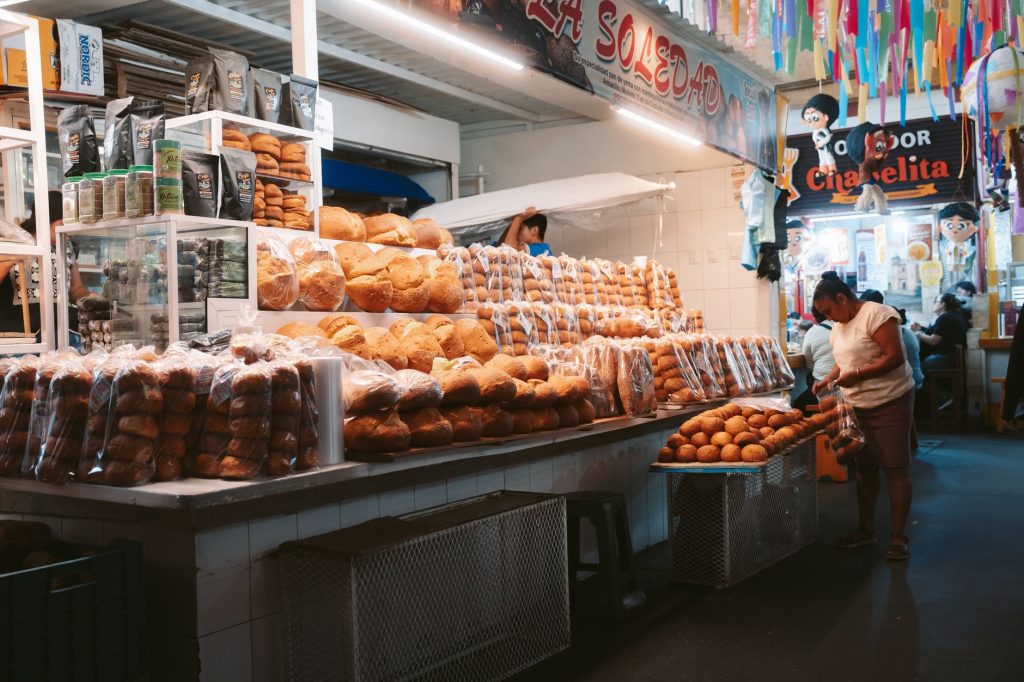
What does a traditional Mexican panadería look like at six in the morning? At La Favorita Bakery on Belmont Avenue, the answer involves flour-dusted sheet pans, the low hum of a rotating oven, and Yolanda Morales moving between the worktable and the display case with the economy of someone who has done this thousands of times. She has. Her family has operated this bakery for over two decades, and the rhythms of the place belong entirely to her.
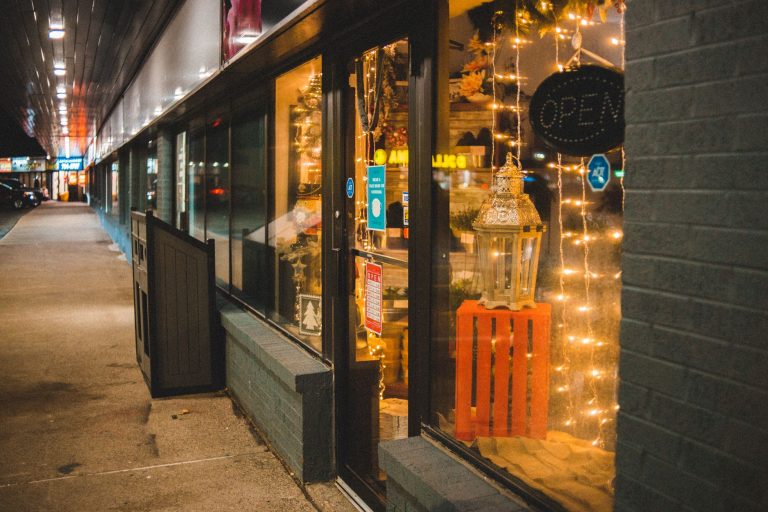
La Favorita sits in a stretch of Belmont that runs through one of Fresno’s older residential corridors — not far from downtown, east of Blackstone, the kind of block where the signage is bilingual and the parking lot fills early. The storefront is modest: a glass case along one wall, a few small tables, a register near the door. The cases hold what matters. Conchas in vanilla and chocolate, their scored sugar tops crumbling at the edges. Cuernos brushed with a glaze that sets shiny and slightly sweet. Polvorones packed dense with lard and sugar. Empanadas filled with pineapple, with cajeta, with sweet potato. On weekends, there are tres leches cakes and flan waiting in the refrigerated section at the back.
Morales learned to bake from her mother, who learned from hers, and the recipes at La Favorita are not written down in any form that a culinary school would recognize. She adjusts by feel — the texture of the dough, the color of the crust, the smell when something is two minutes from done. Regular customers pick up on this. Some come in specifically asking whether the polvorones are fresh that day, as if the answer might change their plans.
The conchas here are worth the trip on their own. The bread is pillowy without being spongy, and the sugar topping stays crisp rather than softening into a paste the way inferior versions do. At around a dollar apiece, they represent one of the better values in Fresno’s food landscape. A baker’s dozen of assorted pan dulce — Morales lets customers choose their own mix — runs somewhere in the range of twelve to fourteen dollars and feeds a table comfortably.
Saturday mornings are the busiest. By eight, the regulars have already cycled through — families buying a bag for Sunday breakfast, workers grabbing a concha and a coffee before a shift, grandmothers who have been coming here long enough to get the nod of recognition without saying much. The line moves fast because Morales and whoever is working with her that morning have seen it all before.
Tamales appear during the holidays, made in quantity and gone quickly enough that calling ahead is the practical move. The same applies to seasonal specialties around Día de los Muertos, when pan de muerto fills the case and the lines run out the door.
What La Favorita does is not unusual in concept — Mexican bakeries exist across the Central Valley — but the consistency here, over years and through the kind of economic pressure that closes most small food businesses, says something about how seriously Morales takes the work. The bread tastes the way it’s supposed to taste, and that turns out to be harder to find than it should be.