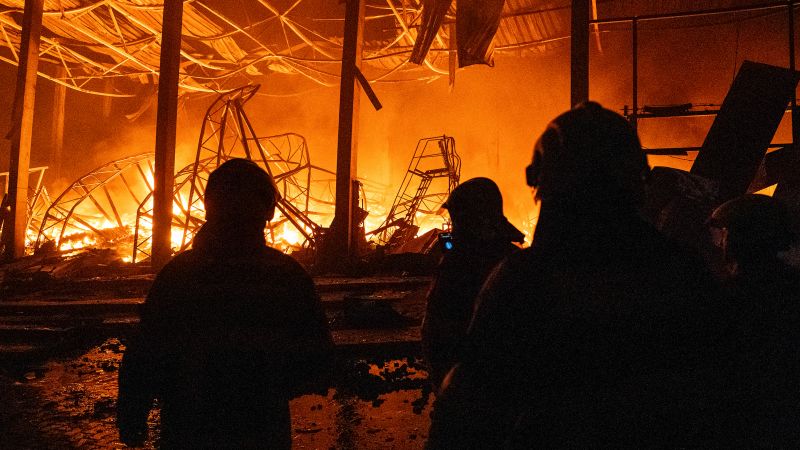
As the United States readies a new round of diplomatic talks aimed at ending the conflict in Ukraine, Russian President Vladimir Putin is stepping up a campaign that appears designed to cripple the Ukrainian economy. Analysts say the latest wave of missile and drone strikes is hitting energy facilities, steel mills and other civilian targets earlier and more aggressively than in previous years.
Escalating air campaign
Data compiled by the global conflict monitor ACLED shows a steady rise in Russian strikes throughout 2026. In January, 3,650 attacks were recorded; by October that number had climbed to 5,532. The United Nations investigative panel last week concluded that Russia has committed war crimes and crimes against humanity by deliberately targeting civilian infrastructure, especially energy systems during the harsh winter of 2025‑2026.
John Lough, head of international partnerships at the New Eurasian Strategies Centre, told CNN the Russian air campaign is “clearly aimed at destroying the Ukrainian economy.” He added that many of Kyiv’s European allies have yet to grasp the full financial burden the attacks could place on them.
Targeting industry and daily life
Major steel plants in Kryvyi Rih and Zaporizhzhia have been hit by ballistic missiles, forcing shutdowns that threaten the tax base and the wages of thousands of families. Kateryna Stepanenko of the Institute for the Study of War noted that Russia is now striking daytime business districts, triggering air‑alert protocols that legally prevent many government offices and private enterprises from operating.
Energy facilities in previously untouched western regions, such as Rivne, are also under fire, creating new challenges for Ukraine’s already strained air defenses. Local authorities in Kyiv reported that roughly 40 % of buildings were without heating on a recent Saturday, underscoring the growing hardship as winter approaches.
Humanitarian impact
ACLED estimates that more than 2,700 Ukrainian civilians have been killed in 2026, the highest toll since the war’s early months. A school used as a shelter in Zaporizhzhia was bombed on a Monday, killing at least 55 people. The International Rescue Committee’s recent survey of households in Mykolaiv found that 91 % urgently need financial assistance, while 42 % of respondents in Dnipropetrovsk cited the same need.
Olga Kashuba, deputy director of field management for the IRC, described how destroyed warehouses and burned grocery stores have eliminated income sources for thousands of small business owners and farmers forced to work on mined fields just to survive.
U.S. diplomatic effort
Despite the mounting devastation, the United States is moving forward with plans to mediate fresh peace talks next week. U.S. officials argue that a strong diplomatic push, coupled with continued military aid to Ukraine, offers the best chance to halt the systematic economic assault and bring a negotiated end to hostilities.
“Moscow is deliberately seeking to leave millions of Ukrainians without electricity, heating, and water as winter approaches,” Ukraine’s foreign minister Andrii Sybiha warned. The U.S. response emphasizes the need for a united international front that holds Russia accountable while supporting Ukraine’s right to self‑defense and economic recovery.
Looking ahead
As the conflict enters its fifth year, the cumulative effect of relentless strikes is straining Ukraine’s fiscal stability and civilian morale. Experts caution that without a decisive diplomatic breakthrough, the humanitarian situation could deteriorate further, placing additional pressure on European partners already bearing significant financial costs.
The coming peace talks will test whether the United States and its allies can translate diplomatic resolve into a concrete pathway for ending the aggression and rebuilding Ukraine’s shattered economy.
Original reporting: KRDO (Colorado Springs metro) — read the source article.