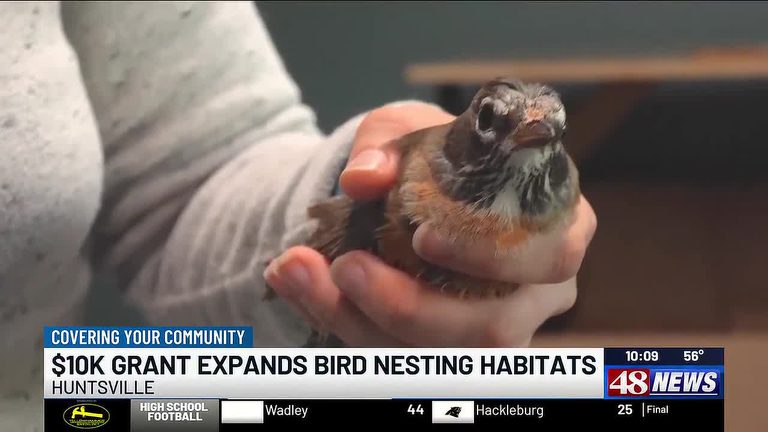
HUNTSVILLE, Ala. – Quinn Wildlife Sanctuary, a nonprofit dedicated to protecting North Alabama’s natural habitats, is launching a new phase of its bird‑nesting project after securing a $10,000 grant. Founder Alexis Quinn says the funding will cover larger nesting boxes for owls, hawks, ducks and other native birds, and will allow the sanctuary to place them on private‑land and Land Trust properties throughout the region.
Why the new boxes are needed
Decades of logging have reduced the number of mature trees that naturally provide cavities for nesting birds. “Older trees that once offered holes for birds are harder to find,” Quinn explained. “Our nesting boxes give these species a safe place to raise their young while we work to restore natural habitat.”
From garden to land‑trust sites
Last year the sanctuary installed 50 smaller nesting boxes at the Huntsville Botanical Garden, a successful effort that attracted a variety of birds and generated valuable data. Building on that momentum, the new grant will fund larger, more robust boxes that can accommodate birds of prey and waterfowl. These will be placed on Land Trust parcels and on the properties of willing private landowners.
How locals can help
Quinn is actively recruiting volunteers and landowners who have suitable habitat and are ready to host a box. “We need people who are willing to have a box installed and help monitor it,” she said. “The data on how the boxes are being used will guide our land‑management decisions and improve outcomes for wildlife across the area.”
Volunteers do not need prior wildlife‑rescue experience. The sanctuary will provide instructions for assembling the boxes, and participants can sign up through Quinn Wildlife Sanctuary’s social‑media pages. Once installed, volunteers will check the boxes periodically, record which species are using them, and report findings to the sanctuary’s staff.
Supporting families and the community
The project aligns with the values of many Huntsville families who cherish the outdoors and want to teach their children about stewardship. By involving local landowners, the sanctuary strengthens community ties and encourages responsible land use that benefits both people and wildlife.
Quinn emphasized that the initiative is a partnership between the sanctuary, volunteers, and private landowners. “Together we can make a real difference for Alabama’s birds,” she said. “It’s a chance for families to get outside, learn about nature, and protect the environment for future generations.”
Get involved
Anyone interested in helping can visit the sanctuary’s Facebook or Instagram pages to learn more and sign up. The sanctuary welcomes individuals, families, churches, and civic groups who share a love for Alabama’s natural heritage.
With the grant’s support and community participation, Quinn Wildlife Sanctuary hopes to expand the nesting program throughout North Alabama, creating a network of safe habitats that will benefit birds for years to come.
Original reporting: WAFF 48 Huntsville (news) — read the source article.