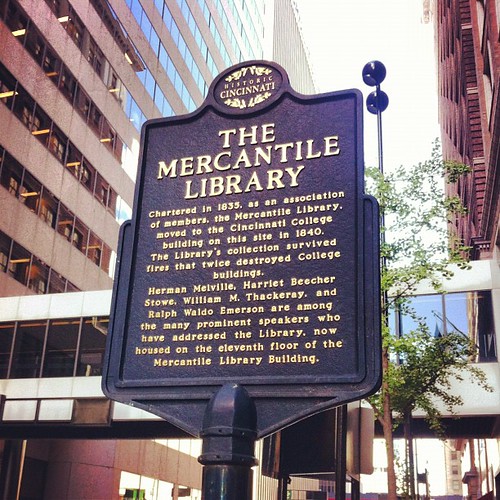
The Mercantile Library sits on the eleventh floor of a downtown office building, and most people who work in that building have never been inside it. That’s not a complaint — it’s just a fact that tells you something about the place. Founded in 1835, it’s one of the oldest membership libraries in the country, and it has spent most of its life operating quietly above the street-level noise of Fourth Street, doing exactly what it wants to do.
Walk in and you’ll find a reading room that feels like it belongs to a different century — not because it’s shabby, but because it’s deliberate. Dark wood shelves line the walls. Club chairs sit near tall windows that look out over downtown Cincinnati. There’s a fireplace. The carpet absorbs sound. You will, almost immediately, feel the urge to lower your voice and sit down.
Janet Cash has worked here long enough that she can tell you which chair William Howard Taft is said to have preferred, and she’ll say it without ceremony, the way you mention a neighbor. She runs the day-to-day operations with an easy authority — greeting members, fielding questions about programming, steering curious visitors through the stacks. Ask her what makes the Mercantile different from a public library and she’ll say something like: “We’re a private membership library. We buy what we want. We’re not trying to be everything to everyone.” That restraint, it turns out, is the whole point.
The collection runs to about 85,000 volumes, weighted toward literature, history, and the humanities. You won’t find a rack of new thrillers, but you will find a first edition of Leaves of Grass behind glass, and an ongoing selection of carefully curated new titles that the staff actually reads. The periodical room still gets print subscriptions to publications most people forgot existed in print.
Membership costs around $175 a year for an individual — not nothing, but not unreasonable when you consider what you get: access to the stacks and reading rooms, free or discounted admission to the library’s lecture series, and the right to borrow from a collection that is refreshingly free from committee thinking. The lecture series alone draws writers, historians, and thinkers worth hearing; past speakers have included novelists, biographers, and the occasional scholar who can hold a room.
Non-members can visit during open hours without charge — the library doesn’t lock the door against the curious — but you’ll need a membership to check anything out or attend ticketed events. The building entrance is off Fourth Street downtown, and there’s a small elevator that deposits you directly into the eleventh floor lobby. First-timers sometimes stand there for a moment, recalibrating, because nothing outside prepares you for what’s inside.
Go on a Tuesday or Wednesday afternoon if you want the reading room mostly to yourself. Weekend mornings get busier, particularly before lecture events. The library is closed Sundays. If you go expecting a quiet hour with a book and maybe a conversation with someone on staff who can tell you exactly which 1920s Cincinnati novelist is criminally underread, you will not leave disappointed.
Cincinnati has a lot of institutions that call themselves cultural treasures. The Mercantile Library doesn’t call itself anything. It just keeps the lights on, keeps the shelves full, and trusts you to figure out why that matters.