What is it that keeps pulling people back to the old Fair Park neighborhood diamond on a weeknight, long after the last school bell has rung?
The answer has something to do with the light. When the sodium floods kick on above the Fair Park baseball complex just off Greenwood Road, they catch the red clay of the infield in a way that makes the whole thing look like a painting someone forgot to finish. It’s one of those Shreveport details that locals absorb without really noticing, until a visitor stops and says something.
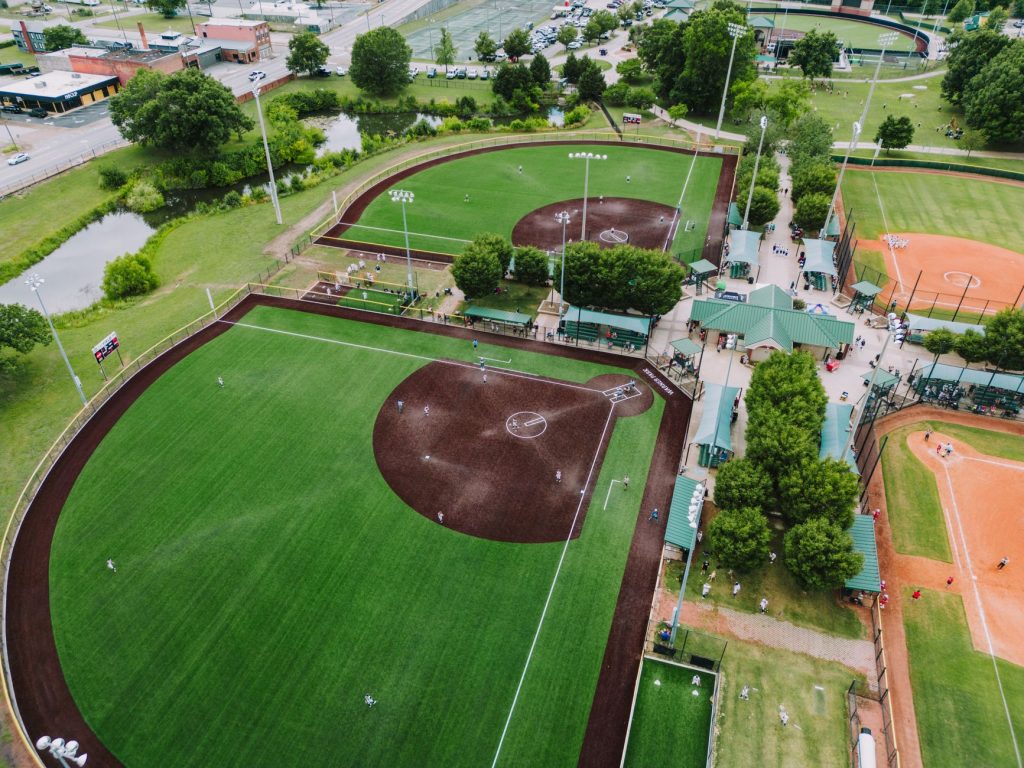
Fair Park High School’s baseball program has been running since the school itself was rebuilt and reshuffled through decades of Caddo Parish school politics, but the field infrastructure around it has quietly become one of the more polished diamonds in the northwest Louisiana public school circuit. The main varsity field — backstopped, chalked, dugouts poured in proper concrete — hosts not just school games but a rotating calendar of summer travel ball tournaments, American Legion contests, and the occasional alumni weekend that brings former players back from Baton Rouge or Houston or wherever life sent them.
The surrounding Independence Bowl Foundation Fields, a youth development complex linked to the foundation’s broader community sports mission, sit adjacent and give the whole area an odd layered quality: a school program, a youth initiative, and a neighborhood institution all sharing the same patch of Shreveport’s west side. On a Saturday in spring, three different age groups might be on the dirt simultaneously, coaches shouting from behind screens, parents folded into camp chairs along the baselines.
Admission to watch school games is typically a few dollars at the gate — sometimes free for regular-season non-district play — and the concession stand, when it opens, runs the standard booster club circuit: hot dogs, nachos, the kind of sweet tea that comes from a cooler and costs a dollar fifty. Nobody’s pretending it’s something it isn’t.
The Fair Park neighborhood itself carries a complicated civic history, one that community members navigate with more candor than most tourist-facing material allows. The school has served a predominantly Black population for most of its modern existence, and the baseball field is a point of genuine pride in a neighborhood that doesn’t always get to claim many city-maintained amenities in good working order. That context matters when watching a teenager in a Fair Park jersey turn a double play on a Tuesday night with thirty people in the stands. The investment in that moment is not abstract.
Peak season runs February through May for high school ball, with summer tournaments filling June and July. The complex is easy to find — head west on Greenwood Road past the older commercial strip, and the light towers are visible before the turn. Parking is free and plentiful. Bring a jacket for April nights; Shreveport evenings have a damp chill that sneaks up after the first inning.
It’s not a stadium in any grand sense. But it’s a real ballpark, used by real teams, watched by real people who care about the outcome. That’s rarer than it sounds.