Madison, Wisconsin – A tragic measles death of an infant this week has drawn attention to a steady decline in school immunization coverage across the Badger State. A new report from the Wisconsin Policy Forum shows that just 16 school districts met the 95% immunization benchmark for the 2025‑26 school year, down sharply from 101 districts in 2019.
Immunization numbers and waiver growth
The study found that 87.4% of K‑12 students satisfied all state immunization requirements during the most recent school year, a modest gain over the prior year but still near historic lows. Personal‑conviction waivers – which let families opt out of required vaccines – rose to 6.5% in 2026, a stark increase from less than 2% in the 1990s.
“Anytime a single community is vulnerable, that does put the rest of us at risk,” said Sara Shaw, deputy research director at the Wisconsin Policy Forum. “We’re in a connected society where disease does not stay localized for very long.”
State health officials’ response
Wisconsin Department of Health Services (DHS) officials reported that roughly 85% of kindergarteners have received both doses of the MMR (measles, mumps, rubella) vaccine, compared with about 92% nationally. Both figures fall short of the roughly 95% coverage needed to halt measles transmission.
Dr. Ryan Westergaard, the state’s chief medical officer and epidemiologist for communicable diseases, warned that the virus is now spreading because enough people remain susceptible to sustain new infections. “It depended on doing the hard work of maintaining high levels of immunity in our communities,” he said.
Outbreak data and infant risk
To date, DHS has documented 431 measles cases across 13 Wisconsin counties, resulting in nine hospitalizations. The majority of cases involve unvaccinated individuals, and many infections have been traced to out‑of‑state travel, including families returning from weddings and funerals.
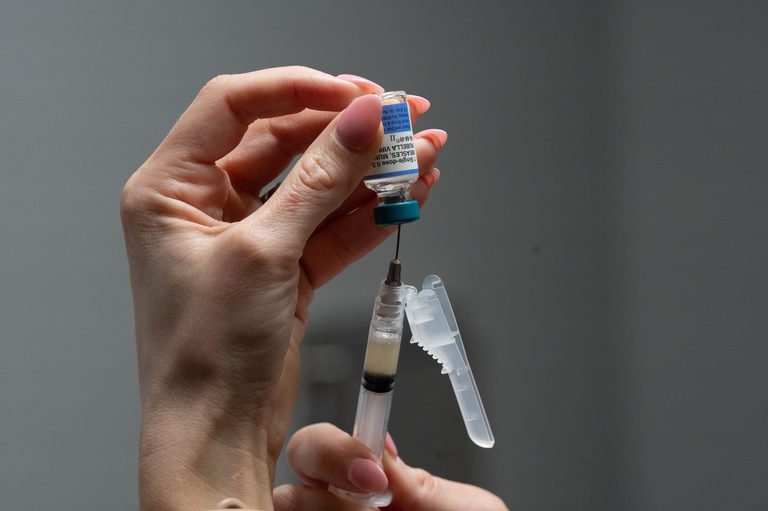
In response, DHS updated guidance to recommend an early MMR dose for certain infants aged six to eleven months who face heightened exposure risk. Parents are urged to consult their health‑care providers to determine eligibility.
Why families are opting out
Dr. Stephanie Schauer, director of the state immunization program, linked the rise in waivers to growing vaccine skepticism following the COVID‑19 pandemic. “More parents are having questions about vaccines and there’s a lot more misinformation and disinformation out there,” she said.
Schauer emphasized that vaccines remain available at no cost to eligible children through state programs, and she called for improved access and education to counter false narratives.
Community protection and parental responsibility
Both Westergaard and Schauer stressed the importance of community immunity, especially for infants too young to be vaccinated. “For families with babies younger than six months or others who cannot be vaccinated, the most important protection is making sure that the people around them are immune,” Westergaard noted.
Local leaders and faith‑based groups are encouraged to partner with health officials to promote accurate vaccine information and to ensure that families understand the safety and necessity of immunizations for the common good.
Looking ahead
The Policy Forum’s findings serve as a warning that without renewed commitment to vaccination, Wisconsin could see additional outbreaks and, tragically, more loss of life. State officials continue to monitor the situation closely and are working with schools, health providers, and community organizations to raise immunization rates back toward the 95% target.
Original reporting: NBC15 WMTV (Gray) – local — read the source article.