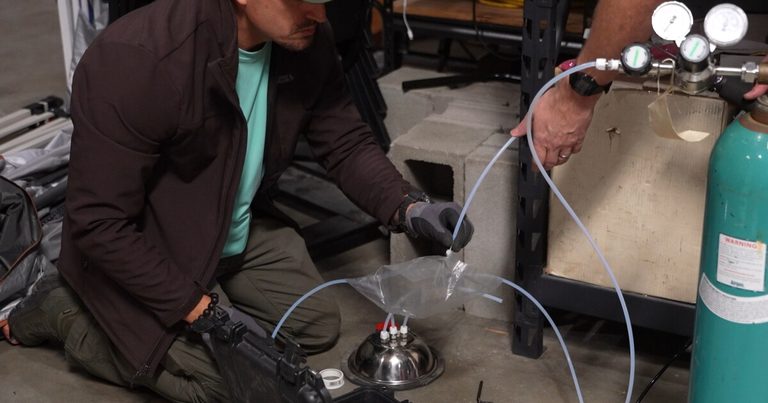
The Environmental Protection Agency has begun systematic indoor‑air testing in Billings as part of its ongoing response to the PCE/TCE Superfund site at 715 Central Ave., the former dry‑cleaner that was excavated two decades ago. Crews are moving from building to building, pulling air directly from workspaces, classrooms and funeral chapels to see if volatile chemicals are seeping up from the contaminated groundwater below.
Why the testing matters
“Those chlorinated solvents can vaporize and travel through preferential pathways,” EPA senior engineer Jo Machesky explained. The agency’s goal is to determine whether any indoor concentrations exceed health benchmarks and, if so, to install mitigation systems before occupants are exposed over the long term.
Local businesses and families get answers
Richard Hall, owner of Dahl Funeral Chapel, said his staff were surprised to learn the site’s vapors might reach their property. After EPA technicians sampled the chapel, Hall noted, “We were on the edge of it, but we’re not overly concerned now that we’ve spoken with the EPA and seen the results.” Similar testing is underway at dozens of private homes and commercial spaces throughout the city.
State‑of‑the‑science testing
EPA field equipment can detect PCE and TCE at parts‑per‑trillion levels—far below the agency’s health‑based benchmarks. “Our detection limits are incredibly low, which allows us to analyze at levels below health‑risk numbers,” said EPA contractor Stephen Blaze. The agency stresses that finding trace amounts does not automatically mean a health threat; the chemicals must be present at concentrations that could cause adverse effects over years.
What happens if levels are elevated?
When elevated vapor concentrations are identified, the EPA can install sub‑slab vapor‑extraction systems, similar to radon mitigation, to prevent indoor exposure. “Depending on where the building is located within the site, it might be automatically eligible for a mitigation system,” Machesky added.
Community reassurance
Local officials and EPA representatives emphasize that the testing is precautionary and that current indoor readings are well below levels associated with acute health impacts. “These are low levels that would cause health impacts only over a long time, and we are monitoring closely,” Machesky said. Residents are encouraged to stay informed through EPA updates and to report any concerns about indoor air quality.
Next steps
The EPA plans to continue testing buildings one by one, prioritizing structures closest to the original contamination source. As data are collected, the agency will decide where mitigation is needed and will work with property owners to implement solutions promptly.
Original reporting: KTVQ Q2 Billings (local) — read the source article.