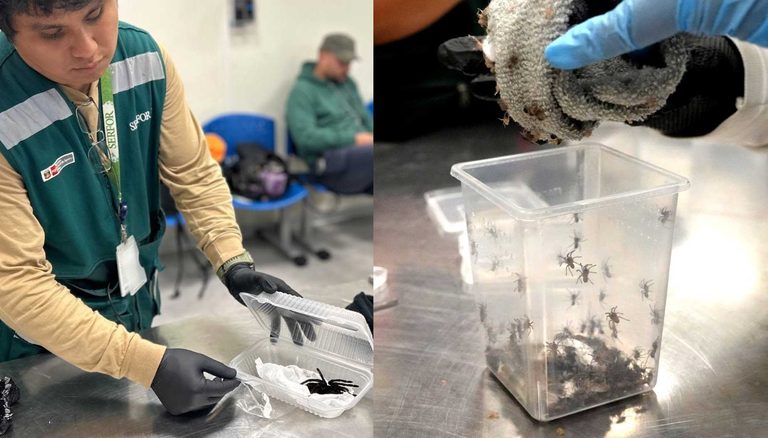
Peruvian National Forest and Wildlife Service officials (SERFOR) uncovered a startling haul of over 3,000 tarantulas concealed inside dirty socks that were packed in three suitcases at Jorge Chávez International Airport in Lima. The suitcases belonged to two German nationals and one Polish national who were preparing to board a flight to Germany.
Details of the seizure
The spiders were hidden in labeled stockings and included a mix of eggs, young spiders and adult specimens. SERFOR officials noted that several of the species have not yet been described by science, underscoring the potential impact on Peru’s biodiversity.
According to the agency, the tarantulas originated from multiple regions across Peru, including Junín, Loreto, Cajamarca, Cusco and La Libertad. This wide geographic spread suggests a coordinated effort to collect specimens from diverse habitats.
Arrests and charges
Airport police detained the three travelers as they were checking in. All three face criminal charges related to environmental crimes, as well as administrative proceedings under Peruvian law. One of the detainees is identified as a well‑known tarantula researcher, a fact confirmed by scientific publications cited by SERFOR.
Authorities suspect the spiders were intended for the exotic‑pet trade, private collectors, or scientific research. After the specimens are identified and evaluated, SERFOR plans to transfer them to an authorized breeding center for further study and conservation purposes.
Legal and conservation context
Peruvian law strictly regulates the capture, transport, and export of wildlife, especially species that are rare or not yet scientifically described. Violations can result in significant fines, imprisonment, and the loss of export permits. The seizure demonstrates the government’s commitment to protecting the nation’s natural heritage and enforcing wildlife‑protection statutes.
Environmental groups have praised the swift action by SERFOR and airport authorities, noting that illegal wildlife trafficking undermines conservation efforts and can introduce invasive species to new ecosystems.
International implications
The incident also highlights the challenges faced by nations worldwide in curbing illegal wildlife trade. While the travelers were headed to Europe, the illegal shipment originated in Peru, raising questions about cross‑border enforcement and the need for stronger cooperation between customs agencies.
Experts warn that the demand for exotic pets fuels a lucrative black market that threatens countless species. By intercepting shipments like this one, authorities aim to deter future attempts and protect Peru’s rich biodiversity for future generations.
Original reporting: WPBF West Palm Beach — read the source article.