In the November 3, 2024 election Texas taxpayers sent a clear message to local officials: they are tired of new debt and higher property‑tax rates. Voters in districts highlighted by Texans for Fiscal Responsibility rejected the vast majority of bond proposals and voter‑approval tax‑rate elections (VATREs) that appeared on the ballot.
Widespread Rejection of Large‑Scale Funding Packages
Among the biggest defeats, Cypress‑Fairbanks ISD turned down a roughly $1.6 billion bond package and an accompanying VATRE that would have raised the maintenance‑and‑operations rate by about nine cents, generating an estimated $103 million in additional operating revenue. None of the five propositions received more than 37 percent support.
Channelview ISD saw all five of its propositions, totaling more than $165 million, rejected. Crosby ISD’s two proposals – $98 million for a new elementary school and $110 million for a new middle school – also failed.
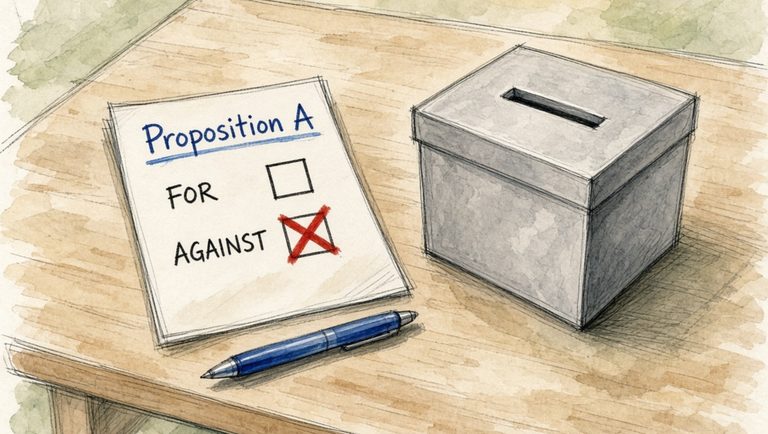
North Texas mirrored the trend. Irving ISD’s four propositions, together worth roughly $952 million, were defeated, with no measure surpassing 45 percent. Keller ISD’s five propositions, including a $756 million facilities package, were likewise rejected. Voters in Cleburne turned down a $62.5 million bond, and Dallas County’s Proposition A, a tax‑rate increase to fund homelessness programs, lost 48‑52.7 percent.
In the McKinney area, a VATRE failed, and voters faced roughly ten ballot propositions that would have raised property taxes; all ten were soundly defeated after the required “THIS IS A PROPERTY TAX INCREASE” disclosure.
San Antonio and Central Texas Follow the Same Pattern
San Antonio ISD’s VATRE and three bond measures, totaling about $600 million, were rejected. Northside ISD’s VATRE and three bond proposals, about $886 million, also failed, as did the VATREs in East Central and South San Antonio. Georgetown ISD’s VATRE fell 48‑52, Robinson ISD’s $81 million junior‑high bond was rejected, and Leander ISD’s three‑cent VATRE did not pass.
In East Texas, Leon ISD’s three bond propositions and VATRE all failed, as did San Augustine ISD’s $750,000 proposition. The only notable success in that region was Teague ISD, which approved a $21.3 million classroom and facilities proposition while rejecting a $20.9 million athletic proposal.
Isolated Successes Amid Broad Skepticism
A handful of districts saw their measures pass. Childress ISD approved all four of its propositions, including $88.5 million for high‑school renovation, a new elementary school, a field house, and an attendance‑credit election. Manor ISD passed two bond packages totaling roughly $400 million. Seguin ISD and Schertz‑Cibolo‑Universal City ISD narrowly approved their VATREs.
These outcomes occurred despite many districts emphasizing aging facilities, inflation pressures, and funding shortfalls. Voters, however, appear unwilling to shoulder additional principal amounts that will increase debt service for future generations, especially as household expenses for insurance, fuel, groceries, and other necessities continue to rise.
What the Results Mean for Texas Communities
The pattern suggests Texas homeowners expect tighter prioritization, fiscal discipline, and restraint before agreeing to higher taxes or new debt. Local officials who return with similar large‑scale proposals in future elections will likely confront an electorate that has already demonstrated a willingness to say “no.”
Texans for Fiscal Responsibility, the nonprofit that compiled these results, emphasizes its mission to illuminate government actions, equip citizens to advocate for pro‑taxpayer and pro‑family reforms, and hold lawmakers accountable. The organization urges continued public engagement to ensure responsible budgeting that protects families and preserves the state’s fiscal health.
Original reporting: Texans for Fiscal Responsibility — read the source article.