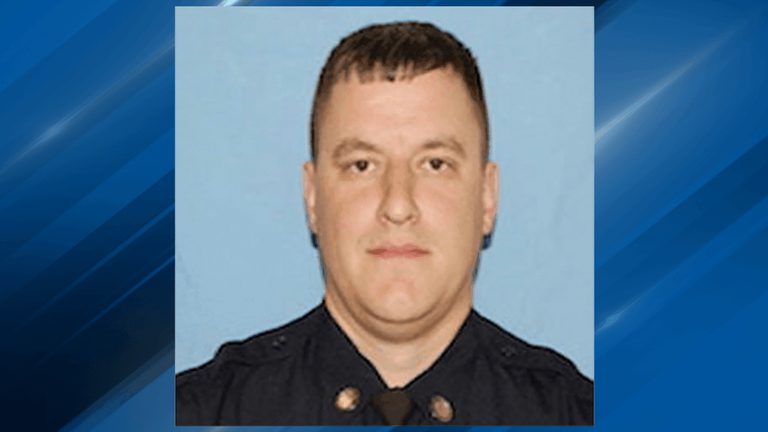
Closing arguments are scheduled for 10 a.m. this Friday in the federal case against former Stoughton police officer Matthew Farwell. The trial, held in the U.S. District Court in Easton, Massachusetts, centers on the alleged sexual abuse of 23-year‑old Sandra Birchmore when she was a minor and her subsequent death, which prosecutors say Farwell staged to look like a suicide.
Prosecution’s theory
The government contends that Farwell killed Birchmore in her apartment on February 1, 2021, then arranged the scene to appear as a self‑inflicted death. Prosecutors argue the motive was to prevent Birchmore from exposing alleged federal crimes Farwell was committing. They also allege that Farwell used his position as a police officer to coerce Birchmore into a relationship, engaged in sexual activity with her while on duty – a potential wire‑fraud violation – and communicated with her across state lines, making the conduct a federal offense.
Defense’s position
Farwell’s attorneys maintain that Birchmore suffered from longstanding mental‑health challenges. They assert that when Farwell visited her apartment to end their relationship, Birchmore was so distraught that she took her own life. The defense emphasizes the lack of direct evidence linking Farwell to a motive beyond personal matters.
Federal burden of proof
Because the case is tried in federal court, the prosecution must meet a higher burden of proof than in a state proceeding. As NBC 10 political analyst Austin Dana explained, the government must not only prove that Farwell caused Birchmore’s death but also establish a specific motive tied to federal law violations. This heightened standard makes the upcoming closing arguments especially critical for both sides.
Trial logistics
Each side will have a total of 90 minutes to address the jury. After the arguments, the judge will issue instructions outlining the elements the jurors must consider when deliberating on conviction or acquittal. The jury will then begin its deliberations to determine whether the government has proven its case beyond a reasonable doubt.
Community impact
The case has drawn significant attention in the Easton and broader Massachusetts community, raising concerns about the safety of minors and the abuse of authority by law‑enforcement officials. Local faith leaders and family‑rights advocates have called for a thorough and fair process, emphasizing the need to protect vulnerable individuals while ensuring due process for the accused.
As the trial reaches its final stage, residents of Easton and surrounding towns will be watching closely to see how the federal system handles a case that intertwines alleged sexual abuse, potential federal crimes, and the tragic loss of a young woman.
Original reporting: NBC 10 WJAR (Sinclair) – local — read the source article.