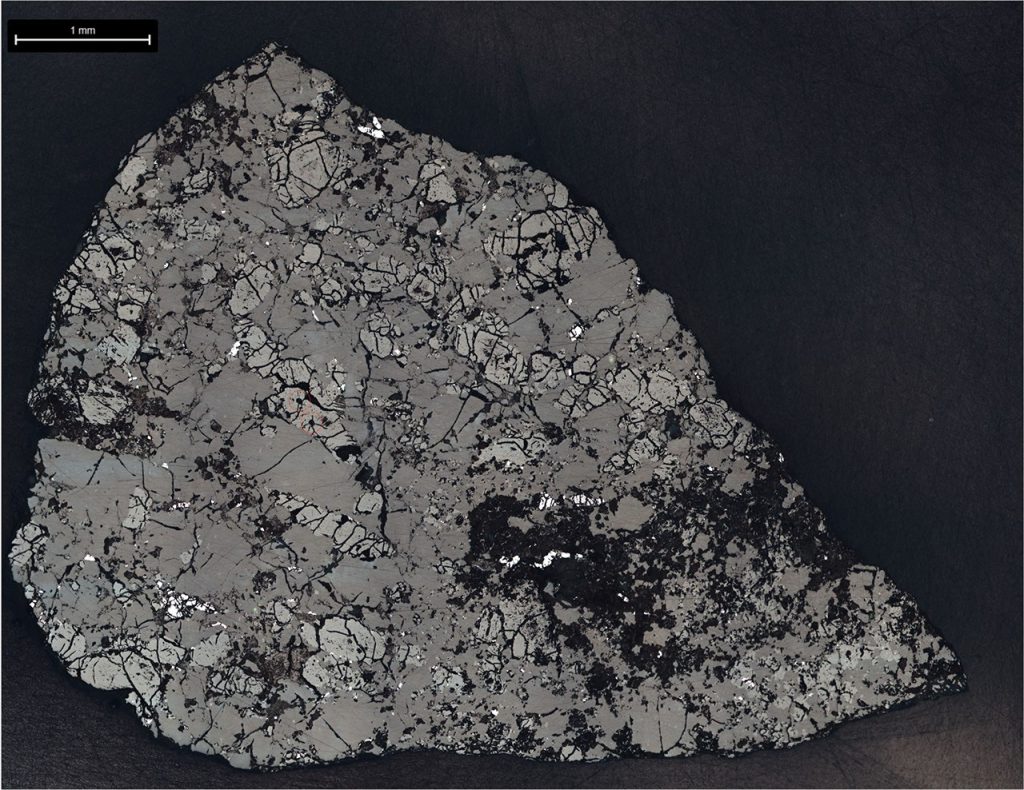
Researchers have announced the discovery of Teghaza 001, a rose‑colored meteorite recovered from the Sahara desert in Mali that dates back at least 4.1 billion years. The rock, weighing a total of 798.5 grams across eight fragments, offers a rare glimpse into the early crust and mantle of Mars, a time when life was just beginning on Earth.
Scientific significance
Lead author Yang Liu, a planetary scientist at NASA’s Jet Propulsion Laboratory, explained that the meteorite’s unique chemical composition indicates it originated from a region of the Martian crust that has never been sampled before. Unlike the more common shergottite meteorites—most of which are under 600 million years old—Teghaza 001 contains zircon crystals that act as precise time capsules, allowing researchers to date its formation to the planet’s first 400 million years.
Using a newly developed laser‑vaporization technique, doctoral student Hayward Melton at Caltech was able to date the zircon crystals in a matter of days rather than weeks, preserving more of the sample for future study. The analysis shows the rock is a basalt, similar to volcanic rocks on Earth’s ocean floors, and that it interacted with water in the ancient Martian crust.
Implications for Mars and Earth
“The presence of water‑altered minerals suggests that early Mars had liquid water on its surface,” Liu said. “Understanding why Mars became dry while Earth retained its oceans can help us assess the habitability of other planets.”
Co‑author Matthew Genge of Imperial College London, who was not involved in the study, called the find “fascinating” and noted that the meteorite provides a window into Mars’ early history, a period when the planet was still forming its crust and mantle.
Discovery and provenance
Teghaza 001 was discovered by meteorite hunters in 2022 on a salt plain in western Mali. After being blasted off Mars by an impact event, the rock spent millions of years orbiting the Sun before Earth’s gravity captured it. Its surface features suggest it may have lingered in the Sahara desert before being recovered.
Following its acquisition, the meteorite was purchased by the Maine Mineral & Gem Museum in Bethel, Maine, where it will be available for further scientific examination.
Future research
The team has identified 13 potential source locations in Mars’ southern highlands and plans to compare the meteorite’s isotopic signatures with data from NASA’s Viking, Curiosity, and Perseverance missions. Liu emphasized that this is only the beginning of what could be a series of discoveries shedding light on the red planet’s formative years.
Original reporting: KRDO (Colorado Springs metro) — read the source article.