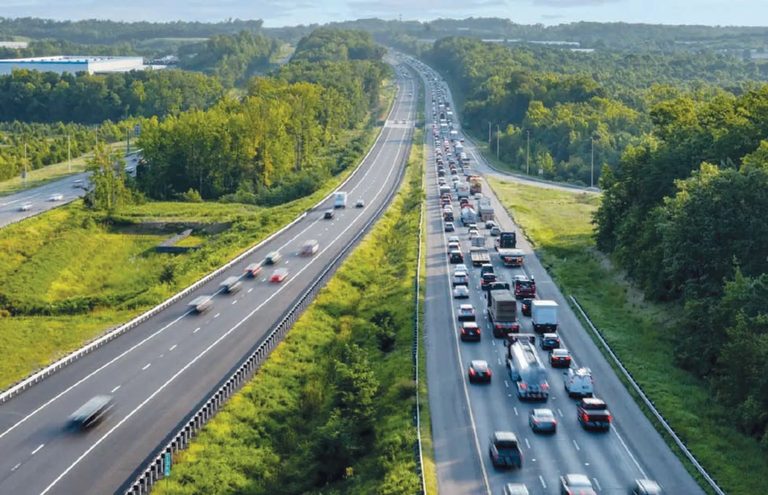
The Virginia Department of Transportation (VDOT) announced that it is evaluating a major upgrade to the I‑95 Express Lanes corridor in Northern Virginia. The study would examine converting the current reversible lanes— which operate in only one direction at a time—into continuous two‑way lanes that run around the clock for about 45 miles.
Local officials hear the proposal
On Oct. 20, the Prince William Board of County Supervisors received a presentation outlining the feasibility of the bi‑directional configuration. County leaders learned that the existing system changes direction according to set weekday and weekend schedules, leaving drivers traveling opposite the flow unable to use the express lanes. The proposed redesign would allow traffic to travel in both directions at all times, potentially easing congestion for commuters and freight movers alike.
Scope of the study
The study area stretches from the Springfield Interchange in Fairfax County south to Spotsylvania County. Under the concept presented, three express lanes would operate in each direction from the Franconia‑Springfield Parkway area to Prince William Parkway. South of Prince William Parkway, the plan calls for two lanes in each direction, including an additional roughly 10‑mile extension beyond U.S. 17.
Potential impacts and benefits
VDOT officials noted that a bi‑directional system could improve travel times for commuters using OmniRide and other bus services, which currently benefit only when traveling in the same direction as the express lanes. With lanes open both ways, buses heading opposite the prevailing flow would no longer be forced onto regular lanes, potentially reducing overall congestion.
The department is still in the feasibility stage. It has begun field data collection and preliminary engineering and environmental studies. Early assessments suggest much of the work could be completed within existing rights‑of‑way, though some property acquisition may be required in select locations. VDOT emphasized its intent to minimize impacts on homeowners and businesses.
Public involvement and timeline
VDOT plans to hold public information meetings in 2027 and 2028 to keep residents, businesses and other stakeholders informed and to gather feedback. A formal public hearing is scheduled for 2028, giving the community a chance to weigh in before any final decisions are made.
Because the project remains in the study phase, the schedule, construction timeline and any commercial agreements are still uncertain. The department will continue to evaluate traffic patterns, property considerations, road configuration, ingress and egress points, and environmental impacts before moving forward.
What this means for local commuters
If approved, the bi‑directional express lanes could provide a reliable, high‑speed travel option for drivers traveling both north‑bound and south‑bound on I‑95 at any hour. The improvement aligns with VDOT’s broader goal of enhancing mobility across the Commonwealth while preserving the character of the neighborhoods the corridor traverses.
Local officials and residents are encouraged to attend the upcoming information sessions to learn more about the proposal, ask questions, and share concerns. Continued community input will be a key factor in shaping the final design and ensuring the project serves the needs of Northern Virginia’s families and businesses.
Original reporting: Alexandria, VA News – WTOP News — read the source article.