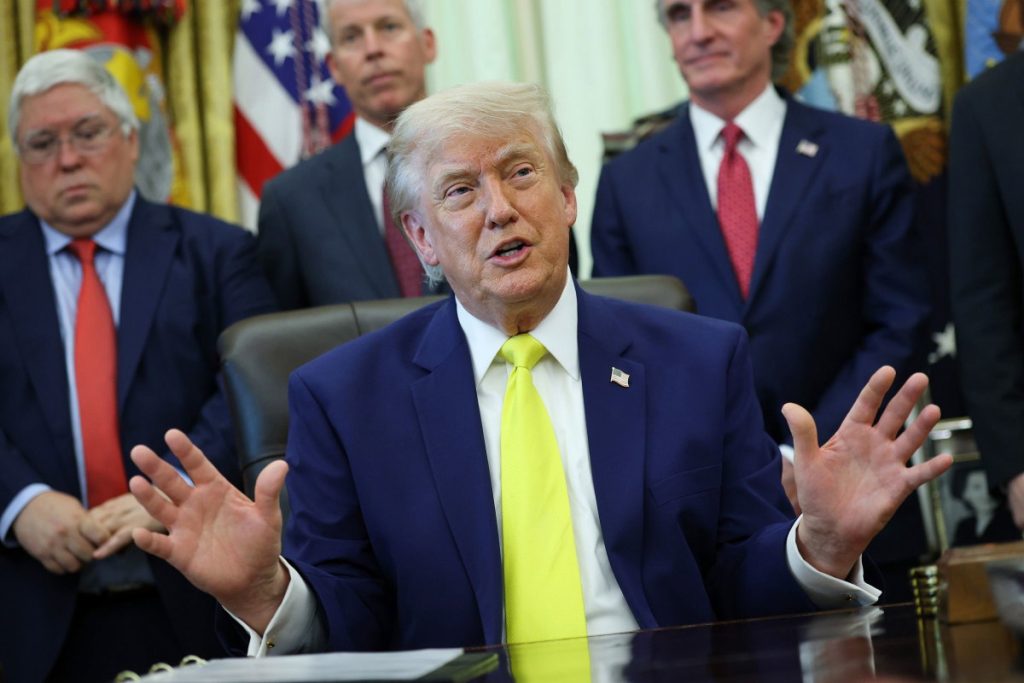
President Donald Trump’s recent appointment of Bill Pulte as the acting director of national intelligence has raised eyebrows due to Pulte’s lack of a security clearance prior to his selection. This decision has sparked concerns among lawmakers and national security professionals about his qualifications for the role, which involves access to highly classified information.
Unconventional Appointment
Pulte, a wealthy businessman and former director of the Federal Housing Finance Agency, was an unexpected choice for the position, given his limited experience in national security matters. Sources indicate that Pulte had not been vetted for any security clearance before his appointment, a process typically required for such a high-level role.
The vetting process for Pulte’s security clearance has only recently begun, following Trump’s announcement. Despite this, Trump is expected to grant Pulte access to classified information before he officially assumes the role next month, potentially bypassing standard vetting procedures.
Concerns from Lawmakers
Senator Mark Warner, a leading Democrat on the intelligence committee, expressed doubts about Pulte’s ability to handle classified information responsibly. Senate Majority Leader John Thune also voiced concerns, emphasizing the need for professionals in the intelligence community rather than politically motivated appointments.
Trump, however, dismissed these concerns, highlighting Pulte’s intelligence and integrity. He noted that Pulte’s role would be temporary and suggested that his business acumen could be beneficial in the intelligence community.
Security Clearance Process
Typically, individuals in senior intelligence roles undergo rigorous background checks and may be required to take polygraph tests to ensure they are free from security vulnerabilities. However, Trump has previously expedited the clearance process for several appointees, including family members, during his first term.
Pulte’s appointment has drawn criticism from both sides of the political aisle, with many questioning the rationale behind his selection. Critics argue that the role of director of national intelligence, established post-9/11, is crucial for preventing intelligence failures and should be filled by someone with relevant experience.
Original reporting: KEYT (Ventura/Santa Barbara) — read the source article.