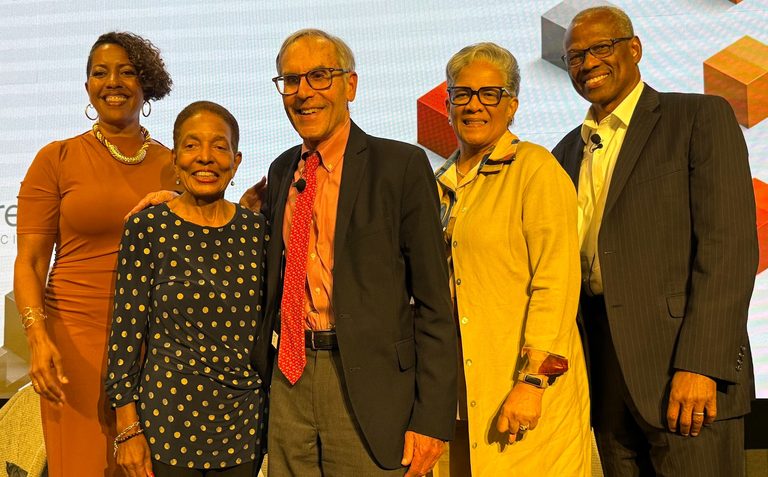
On Oct. 29, housing officials, researchers and nonprofit executives gathered at The Gathering Spot in Atlanta for a forum titled “A Conversation on Housing, Poverty, and Family Outcomes.” The event, organized by The Integral Group and Coretto Associates, brought together participants from 14 states and Washington, D.C. to examine the legacy of public housing and explore policies that truly lift families.
Historical context and the need for reform
Howard Husock, a senior fellow at the American Enterprise Institute, reminded the audience that federally supported public housing began in Atlanta when President Franklin Roosevelt turned on the lights at Techwood Homes in 1935. He noted the program’s early segregation – Techwood housed only white residents while University Homes served Black residents – and argued that later government‑led demolition of Black neighborhoods for public housing and highways deepened the Black‑white wealth gap.
Questions about long‑term financial independence
Husock cited his research showing that 73 percent of housing‑voucher recipients stay in subsidized units for at least ten years, suggesting that rent increases tied to earnings can discourage upward mobility. Former Atlanta Housing CEO Renee Lewis Glover echoed this concern, urging that housing programs be judged by whether families increase income, savings, assets and independence, rather than by administrative metrics.
Mixed‑income redevelopment and public‑private partnerships
Egbert Perry, chairman of The Integral Group, stressed that simply replacing dilapidated buildings is insufficient. He advocated mixed‑income redevelopment and public‑private partnerships to attract investment, businesses and services while preserving affordable units. Perry also highlighted the importance of schools, transportation, employment opportunities and neighborhood safety in sustaining those investments.
Family support coordination shows tangible results
Hope Boldon of The Ascent Project described a family‑support coordination model that pairs redevelopment‑affected families with coordinators who create individualized plans and connect residents to job training, child‑care, transportation and educational resources. Boldon noted that a 9‑year‑old child could be 17 by the time a redevelopment project finishes, making ongoing support essential.
She cited a decline in reported child‑abuse cases in Fulton County—from 24.2 to 7.3 per 1,000 children between 2004 and 2008—compared with a statewide decline from 22.5 to 10.3. The program also reported a 97 percent family‑engagement rate across 18 Atlanta communities and generated more than 10,000 service referrals.
Looking ahead
Moderator Natosha Reid Rice, former vice president at Habitat for Humanity International, urged participants to translate decades of housing experience into practical solutions. The consensus was clear: the true measure of housing policy is not the number of units built, but whether families gain stability, opportunity and a clear path toward independence.
As Atlanta continues to grapple with affordable‑housing shortages, the discussion underscored the need for policies that combine physical redevelopment with robust family support services, ensuring that homes become more than just roofs over heads.
Original reporting: SaportaReport — read the source article.