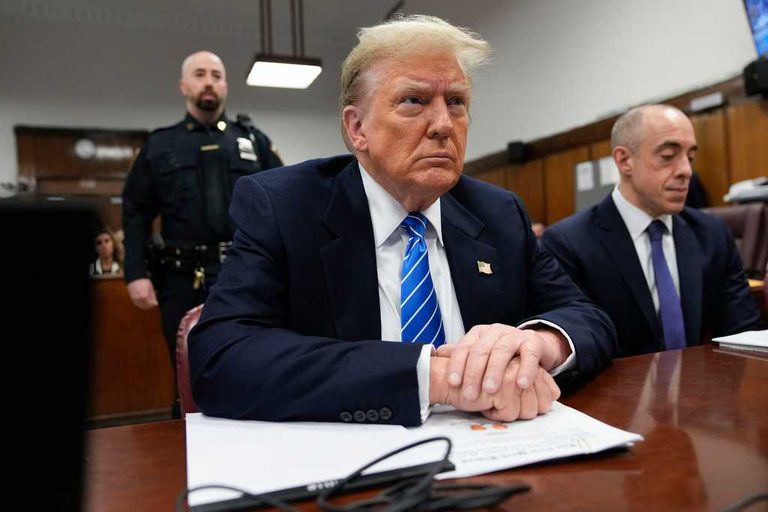
On Thursday, a five‑judge panel of the New York Court of Appeals heard arguments from President Trump’s attorneys seeking to reverse his criminal conviction. The case stems from 34 felony counts of falsifying business records to conceal a $130,000 payment to adult‑film performer Stormy Daniels, a payment the Manhattan District Attorney says was intended to keep unflattering information from voters before the 2016 election.
Legal strategy focuses on immunity and procedural flaws
Trump did not attend the hearing, but his lead counsel, Robert Giuffra Jr., told the judges that the state prosecutors had improperly tied the case to federal election law. “We think it’s the most obvious ground for reversal,” Giuffra said, emphasizing that the alleged campaign‑finance theory was built on a shaky combination of state and federal offenses.
Prosecutors countered that the case was not a federal campaign‑finance prosecution but rather a state fraud case, with the federal election law cited only to demonstrate the purpose behind the falsified records. Assistant District Attorney Steven Wu responded to Justice Troy Webber’s question, “Only partially,” noting that the federal law was used merely to show the intent to conceal a conspiracy.
Presidential immunity at issue
The appeal also raises the question of whether jurors should have heard evidence of White House communications, workflow, and even President Trump’s social‑media posts from his first term. Giuffra argues that the president’s actions in responding to the Daniels matter after it became public in 2018 constitute official duties protected by immunity. “When a president addresses the nation to defend himself from allegations of personal misconduct, or discusses such communications with his aides, he is carrying out his constitutional duties and is protected by immunity,” the filing asserted.
Manhattan District Attorney Alvin Bragg’s office maintains that the legal theory and jury instructions were proper and that the White House‑related evidence was admissible. Prosecutors describe the evidence as a mix of public records, general descriptions of office practices, and “unofficial conduct,” arguing that private discussions, even with advisors, do not rise to the level of official acts.
Political context and historical significance
The May 2024 verdict made President Trump the first U.S. president—now a sitting president—with a criminal conviction. While historic, the conviction has not prevented him from returning to the White House or from continuing his policy agenda.
Trump’s team also continues to pursue a parallel effort to move the case to federal court on immunity grounds, a request that a federal judge denied for the third time in August. The appeal of that decision is scheduled for a hearing on November 16.
What’s at stake
If the appellate court overturns the conviction, it would represent a significant legal victory for the administration and could set a precedent for how presidential actions are evaluated in criminal investigations. Conversely, upholding the conviction would reinforce the principle that no individual, regardless of office, is above the law.
The outcome of this appeal will likely influence ongoing debates about the limits of executive authority, the role of state prosecutors in political matters, and the broader narrative surrounding President Trump’s legal battles.
Original reporting: 40/29 / KHBS (NW Arkansas) — read the source article.