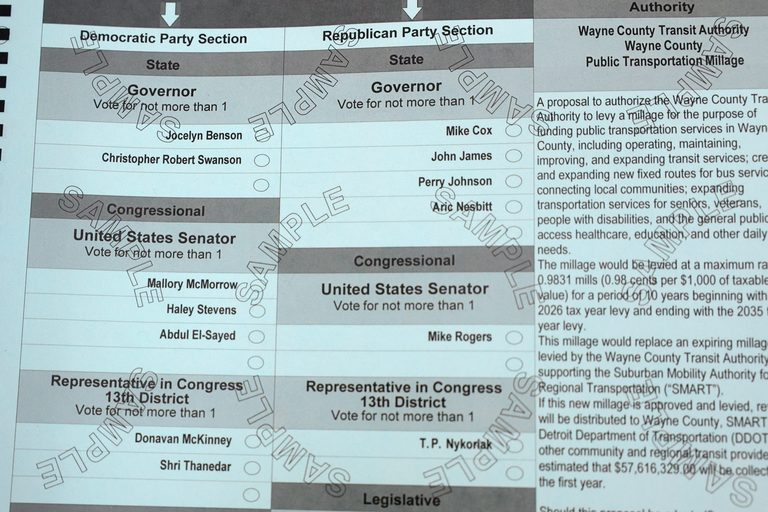
Michigan’s historic voter turnout in the 2026 governor’s race is a clear sign that citizens are engaged in the democratic process. With more than 4.75 million people casting ballots, the state will raise the signature thresholds required for citizen‑initiated measures in the next election cycles.
Signature thresholds tied to turnout
Under Michigan law, the number of signatures needed to qualify a measure for the ballot is calculated as a percentage of the votes cast in the most recent gubernatorial election. The thresholds are:
- Constitutional amendments – 10% of the governor’s vote total
- State statutes – 8% of the governor’s vote total
- Referendums – 5% of the governor’s vote total
Because 4,752,267 people voted for governor in 2026, the raw numbers required for each type of measure have risen sharply compared with the 2022 cycle, when 4,500,400 voters turned out.
What this means for 2028 and 2030
Advocates who wish to amend the Michigan Constitution, change state law, or place a referendum on the ballot will now need to collect more signatures than in recent cycles. For example, a constitutional amendment would require roughly 475,000 valid signatures, while a state statute would need about 380,000.
The higher bar reflects the principle that a measure supported by a larger portion of the electorate should be required to demonstrate broader public backing before appearing on the ballot. It also underscores the importance of organized, grassroots campaigning – a hallmark of responsible civic participation.
Recent example: Prop 2
In the 2026 election, the only citizen‑pushed state statute was Proposition 2, which sought to limit political donations from utility companies and large government contractors to public officials and candidates. The signature threshold for Prop 2 was calculated using the 2022 turnout figures, illustrating how the new, higher thresholds will affect future initiatives.
Public officials praised the turnout, noting that it signals a healthy democratic spirit in Michigan. They also warned that the increased signature requirements will demand more diligent effort from groups seeking to place measures on the ballot, ensuring that only proposals with genuine, widespread support move forward.
How to prepare
Organizations planning to launch initiatives for the 2028 or 2030 ballots should begin signature‑gathering campaigns early, invest in volunteer training, and consider partnerships with community groups that share their goals. Leveraging digital tools for outreach and maintaining transparent record‑keeping will help meet the stricter standards.
Voters who wish to see specific changes can also support these efforts by volunteering, donating time or resources, and staying informed about upcoming petition drives. The increased participation in 2026 demonstrates that Michigan residents care deeply about the direction of their state, and the new signature thresholds will help ensure that only well‑supported ideas reach the ballot.
Looking ahead
As Michigan heads toward the 2028 election, the higher signature thresholds will shape the landscape of citizen‑initiated policy. While the bar is higher, the underlying message is clear: an engaged electorate demands rigorous standards for constitutional and statutory changes, reinforcing the integrity of the state’s democratic process.
Original reporting: Warren | FOX 2 Detroit — read the source article.