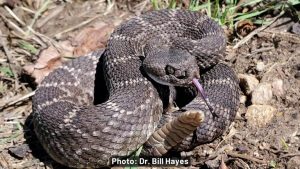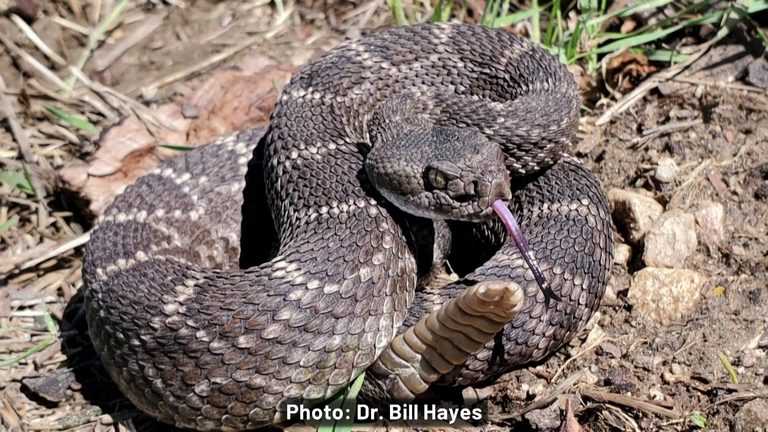
In a new study conducted by scientists at Loma Linda University, researchers have shown that rattlesnakes are not uniform automatons when it comes to venom delivery. The team examined 48 Southern Pacific rattlesnakes and found that each animal’s temperament—whether more timid or more defensive—determines the amount of venom injected during a bite.
Methodology and Findings
Graduate student Chelsea Martin led the effort to assess the snakes’ exploratory and defensive behaviors. Over a series of three voluntary bite trials, spaced two weeks apart, the researchers extracted venom by applying gentle pressure to the snakes’ cheek glands as they bit into a membrane‑covered beaker. The amount of venom collected varied widely among individuals.
“Snakes that were more timid consistently gave small amounts of venom when they bit,” said Dr. Bill Hayes, the study’s senior author. “Those that were much more defensive gave much more venom with each of the three trials.” The consistency of these differences across the three sessions suggests a stable personality trait rather than a random mechanical variation.
Implications for Human Safety
The findings have practical implications for people who encounter rattlesnakes in the wild. While the snakes are not seeking to harm humans, a defensive individual is more likely to inject a larger dose of venom, potentially leading to more serious injuries. Dr. Hayes emphasized the importance of recognizing that not all rattlesnakes pose the same level of risk.
“I don’t want to use the word ‘aggressive,’” he explained. “They’re not out to harm us, but they will defend themselves. Other individuals are more placid and mild‑mannered, but a snake that is reared up and defending itself requires extra caution.”
Environmental Factors
The study also noted that a snake’s environment can shape its disposition. On Santa Catalina Island, the historic introduction of sheep, goats, and pigs made local rattlesnakes more defensive compared with mainland populations in Southern California. Although those livestock have since been removed, the island snakes remain more defensive, illustrating how human‑induced changes to ecosystems can affect wildlife behavior.
Future Research
Dr. Hayes and his team plan to investigate additional environmental influences, such as habitat disturbance and prey availability, to better understand how these factors interact with innate temperament. The researchers hope that a deeper grasp of rattlesnake personality will aid both public education and wildlife management strategies.
Overall, the study challenges the notion that rattlesnake bites are purely mechanical events. Instead, it highlights the role of individual decision‑making in venom injection, offering a more nuanced view of these iconic reptiles.
Original reporting: 13abc WTVG Toledo (news) — read the source article.