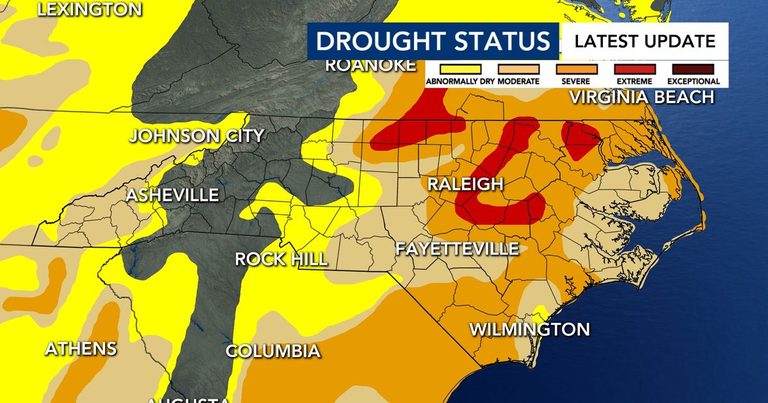
Wake County residents are facing an escalating water shortage as the latest drought status report shows a sharp rise in extreme drought conditions across the state. According to WRAL meteorologist Grant Skinner, 8% of North Carolina is now classified as extreme drought, up from 2% just a week ago. In Wake County, the situation is especially dire, with local officials warning that the limited rainfall expected this week will not be enough to reverse the trend.
Current drought metrics
The drought map released on Thursday, Nov. 5, highlights the areas in red that are experiencing extreme drought. In addition to the 8% statewide figure, 39% of the state is now in severe drought, an increase from 32% the previous week. The expansion of severe drought conditions has moved farther east, affecting more communities that rely on the same water sources.
Rainfall outlook
Skinner noted that the last measurable rain in the Wake County area fell on Oct. 17, delivering only three‑quarters of an inch. The forecast for Friday predicts scattered showers, but total accumulation is expected to be between a quarter of an inch and one inch. Experts say that more than 12 inches of rain are required to begin pulling the region out of the drought, a threshold far beyond the current week’s outlook.
Impact on residents and local services
Local water utilities are urging residents to conserve water wherever possible. Restrictions on outdoor watering, car washing, and non‑essential water use have already been implemented in several counties. Schools and businesses are also adjusting operations to reduce water consumption, and some agricultural producers are facing tough decisions about crop irrigation.
What officials are doing
The state Department of Environmental Quality is monitoring the situation closely and coordinating with local governments to prioritize water allocations for essential services. Emergency management officials are preparing contingency plans should the drought persist into the winter months, including potential water rationing and increased public outreach on conservation measures.
Looking ahead
While the immediate forecast offers little relief, meteorologists caution that longer‑range patterns could bring more substantial rain later in the season. In the meantime, community leaders stress the importance of personal responsibility and collective action to safeguard the limited water supplies.
Residents are encouraged to stay informed through local news outlets and official updates from the North Carolina Department of Environmental Quality. By conserving water and supporting state‑wide drought‑mitigation efforts, the community can help lessen the impact of this severe weather event.
Original reporting: WRAL Raleigh — read the source article.