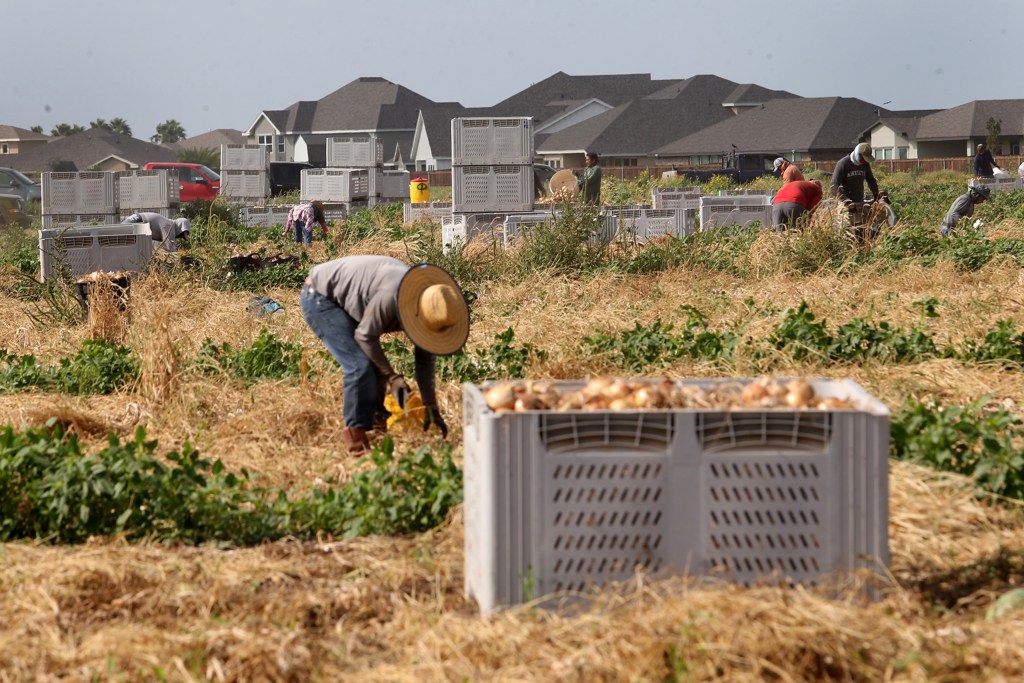
In the heart of Texas’ Rio Grande Valley, a region renowned for its agricultural productivity, concerns are mounting over the health impacts of pesticide exposure. Neuroscientist Kelsey Baker, based in McAllen, has observed a troubling prevalence of Parkinson’s disease among local residents, particularly those living near farms.
Baker, an assistant professor at the University of Texas Rio Grande Valley, shifted her research focus upon discovering the high incidence of Parkinson’s in the area. The disease, a progressive neurological disorder, has long been associated with pesticide exposure. Studies indicate that over 80% of Parkinson’s cases are linked to environmental factors rather than genetics.
The Valley’s agricultural landscape, with homes and schools often surrounded by fields, puts both farmworkers and residents at risk. The use of paraquat, a weedkiller with strong links to Parkinson’s, has increased in the U.S., despite being banned in many countries. The U.S. Environmental Protection Agency has noted that paraquat can travel significant distances, potentially affecting those within a 20-square mile radius.
Community Impact and Personal Stories
Leo Armando Ramirez, Sr., a former Texas Teacher of the Year, was diagnosed with Parkinson’s in 2022. Growing up in Mission, Texas, Ramirez spent summers working in fields where pesticides were regularly sprayed. His family’s history with the disease suggests a possible genetic link, but environmental exposure cannot be ruled out.
Similarly, Esmeralda “Myla” Garza, a retired nurse from McAllen, recalls her childhood in the fields as part of the Bracero Program, where she was exposed to crop dusters dispersing chemicals. These personal stories highlight the human cost of pesticide exposure in the Valley.
Dr. Ray Dorsey, director of the Center for the Brain and Environment, emphasizes the preventable nature of Parkinson’s, likening the situation to early research on smoking and cancer. He advocates for action to reduce exposure to harmful chemicals, which he argues are contributing to the disease.
Efforts to track the prevalence of Parkinson’s in the Valley are complicated by the lack of comprehensive health data, particularly among uninsured and undocumented populations. However, Baker’s ongoing research aims to further illuminate the connection between pesticide exposure and neurological health in the region.
Original reporting: Texas Tribune (HLL/CB) — read the source article.