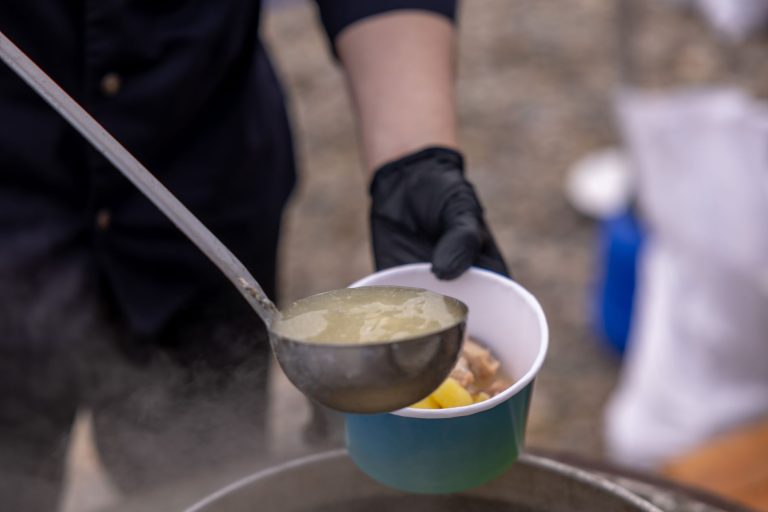
What does it actually take to feed four hundred people before noon? Walk past El Caldito Soup Kitchen on North Main Street on any weekday morning and the question starts to answer itself: a line forming before the doors open, volunteers moving with practiced efficiency behind a serving counter, the smell of beans and chile drifting out toward the sidewalk.
El Caldito — the name means “the little broth” in Spanish — has been operating in Las Cruces since 1980, long before food insecurity became a topic of civic conversation rather than quiet shame. It runs entirely on volunteers and donations, no government funding, and serves a hot meal six days a week to anyone who shows up. No ID required, no means test, no questions. That policy is worth pausing on: in a region where distrust of institutions runs deep, the unconditional door matters.
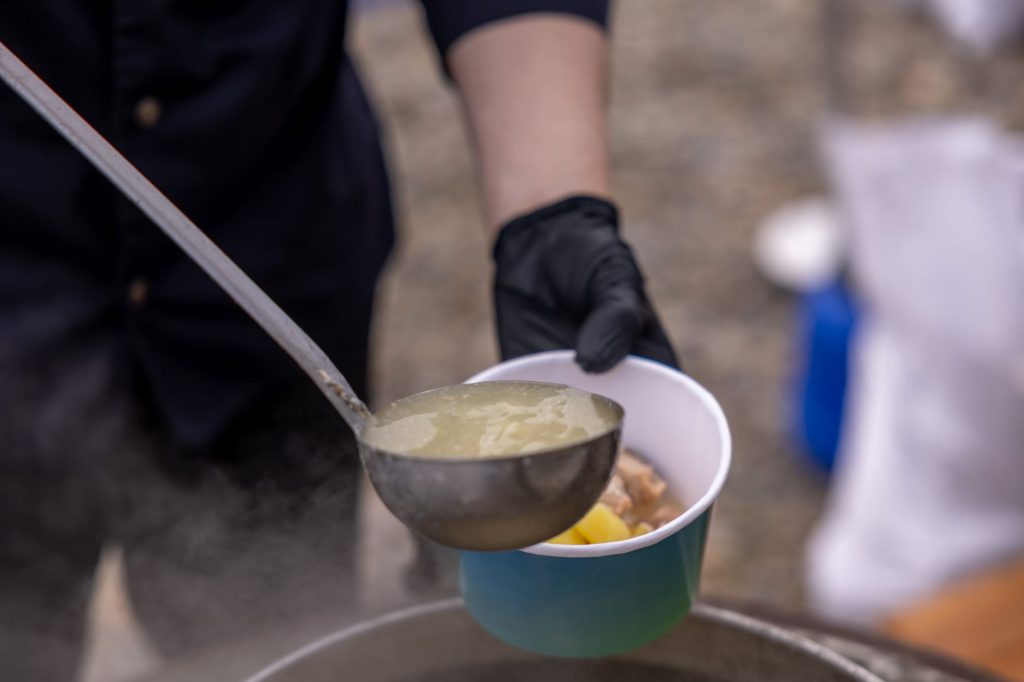
The building itself is plain — a low-slung structure on North Main near downtown, easy to miss at speed. Inside, the dining room is clean and functional, with long tables and a cafeteria-style line. On a typical Tuesday, the menu runs to soup (nearly always, true to the name), rice, beans, bread, and whatever else the week’s donations have made possible. Sometimes there’s green chile. Often there’s dessert from a local bakery. The kitchen team starts cooking in the early morning to have everything ready by 11 a.m.
Volunteers come from all over the city — NMSU students fulfilling service hours, church groups working a monthly rotation, retired residents who have been showing up for years because it became part of their week. On a busy morning, the line might wrap along the building’s exterior. Regulars know the rhythm; first-timers sometimes look uncertain until someone waves them in. The whole operation moves quickly enough that the line rarely stalls.
The budget runs lean by necessity. El Caldito depends on individual donors, food drives, and in-kind contributions from local grocers and restaurants. Because overhead is low and the organization has no paid staff — it is, by design, a volunteer-run enterprise — a dollar given here goes almost entirely toward food. Local food banks and restaurants sometimes call with surplus; the kitchen finds a use for nearly everything.
What makes El Caldito notable in the context of Las Cruces isn’t simply the charity angle. It’s the consistency. Forty-plus years in the same neighborhood, the same daily mission, the same open door. Cities reveal a lot about themselves in how they handle the unglamorous work — the services that don’t generate Instagram posts or food-critic visits. This one has held steady through recessions, through the pandemic (when meal delivery became the workaround), through every turn of the local economy.
Visitors curious about the city’s social fabric who want something more than a restaurant recommendation might consider showing up to volunteer. Shifts are typically a few hours in the morning and can be arranged through the organization’s website or by calling ahead. There’s no cost to serve a meal there, obviously — though donations keep the whole thing running. The soup, for whoever needs it, is free.