Michigan City, Ind. – Early Thursday morning, the Indiana State Prison completed the execution of Jeffrey Weisheit, who was convicted of setting the 2010 house fire that killed siblings Alyssa Lynch, 8, and Caleb Lynch, 5. The execution began shortly after midnight and the Department of Correction recorded Weisheit’s time of death at 12:45 a.m. Central time.
Legal background and clemency denial
Governor Mike Braun rejected Weisheit’s clemency request on Monday, and the Indiana Supreme Court denied a final stay request on Wednesday in a divided decision. The mother of the victims, Lisa Lynch, had urged state officials to uphold the death sentence during the clemency hearing, noting that she had left the children in Weisheit’s care while working an overnight shift when the fatal fire occurred.
Witnesses and procedure
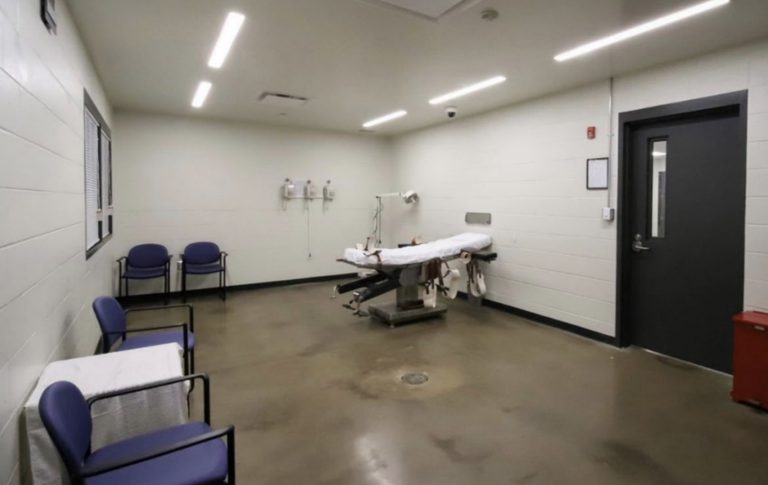
The execution was witnessed by Weisheit’s parents, his sister, defense attorney Joe Perkovich, and a reporter from the Indiana Capital Chronicle – the only media outlet present. Witnesses were allowed a three‑minute view of the chamber. The blinds opened at 12:34 a.m., revealing Weisheit on a gurney as his spiritual adviser spoke, and closed at 12:37 a.m., eight minutes before officials reported his death.
Weisheit did not move or open his eyes during the brief viewing. Witnesses could not see where an IV had been placed or determine when the lethal injection began. His father, Bert Weisheit, expressed frustration with the limited view, saying, “They sure did not allow us to see very much.” A Department of Correction employee responded that the process is “very simple, fast.” Defense attorney Perkovich later admitted, “I don’t know what I saw,” reflecting the limited visibility.
Legal challenges to the execution method
Weisheit’s defense made a final effort to delay the execution by seeking additional time to examine Indiana’s lethal‑injection drugs and the procedures planned for their use. The Indiana Supreme Court rejected that request in a split vote on Wednesday. Perkovich also appealed directly to Governor Braun for intervention, emphasizing that scrutiny of the state’s drug purchases and execution procedures would continue.
State policy on execution witnesses
Indiana does not provide independent witness seats for members of the news media. Reporters may attend only if selected by the condemned inmate for one of five available witness positions. The witness group arrived Wednesday night, passing armed guards at the entrance. The van driver and several guards wore masks to conceal their faces, and all witnesses underwent security screening, including body scanners, metal detectors, and searches of personal belongings.
Community response
The execution reignited discussion among Indiana residents about the death penalty and the state’s criminal‑justice system. While some families of victims see the execution as a measure of justice, others continue to question the morality and efficacy of capital punishment. Local faith leaders have called for prayer for the families involved and for wisdom in how the state administers justice.
As Indiana moves forward, the case remains a touchstone in the ongoing debate over the death penalty, procedural transparency, and the rights of victims’ families to see justice carried out.
Original reporting: WOWO News/Talk (Fort Wayne) — read the source article.