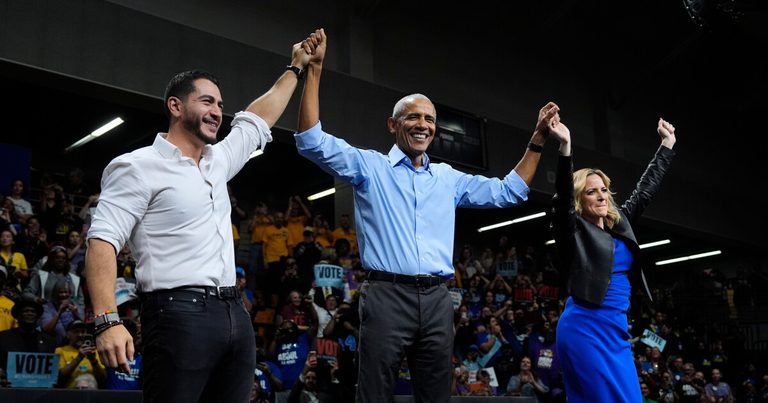
Michigan voters sent a clear message on Tuesday night, delivering a Democratic sweep that reshaped the state’s political landscape. Governor Jocelyn Benson defeated Republican challenger John James, securing back‑to‑back terms for the first time in decades and completing a Democratic trifecta in the state. In the U.S. Senate race, Democrat Abdul El‑Sayed won decisively over Republican Mike Rogers, while two congressional districts also flipped to the blue side.
Key Races and Results
Senate candidate Abdul El‑Sayed defeated Mike Rogers in a race analysts described as a decisive victory. In the House, Democrat Sean McCann unseated incumbent Rep. Bill Huizenga in Michigan’s 4th Congressional District, and Democrat William Lawrence defeated Rep. Tom Barrett in the 7th District. These wins give Democrats control of both Senate seats and add two new seats to the House delegation.
National Factors at Play
Calvin University professor emeritus Doug Koopman, who specializes in politics and economics, told us the election functioned as a “national referendum.” He noted that former President Trump appeared on the ballot and that many voters expressed dissatisfaction with the last two years of his administration’s policies. Koopman said, “People came out to vote and said, ‘We don’t like this. We don’t like the last two years of what we have gotten from this president.’”
Koopman explained that while a sitting president’s party often loses ground during a midterm, the impact this cycle was amplified by national and international issues that entered local races. In Michigan, debates over foreign policy toward Iraq and Israel, as well as opposition to tariffs on Canadian imports, helped boost Democratic candidates.
Local Perspectives
Voters on the ground echoed the sentiment that national politics influenced their choices. Bob Smith, chair of the UAW Community Action Program in West Michigan, said, “I think the working class in Michigan finally hit that wall. We want something different.” He added that the election felt like a referendum on President Trump, noting the former president’s repeated calls to “vote like I’m on the ballot.”
Community activist Miguel Diaz urged newly elected officials to focus on practical solutions, stating, “We have to have that unified message. The competition is over. Let’s go back to being people again.”
Implications for Michigan
The new Democratic leadership promises to pursue policies aimed at supporting working families, strengthening local economies, and protecting constitutional freedoms. Governor Benson has pledged to lower costs and increase transparency in state government, while Senate and House members are expected to advance legislation that aligns with these goals.
Koopman warned that Michigan’s political mood could swing again in future cycles, noting the state’s history of alternating party control. He said, “When you bounce around every two years from a big win to a big loss, the middle is frustrated. We’ll either say, ‘Wow, they finally got it,’ or we’ll say, ‘It was just one more election in the cycle of flipping power.’”
Looking Ahead
As the new administration settles in, Michigan residents will watch closely to see how the Democratic agenda translates into tangible outcomes for families, businesses, and faith communities across the state.
Original reporting: FOX 17 WXMI Grand Rapids (local) — read the source article.