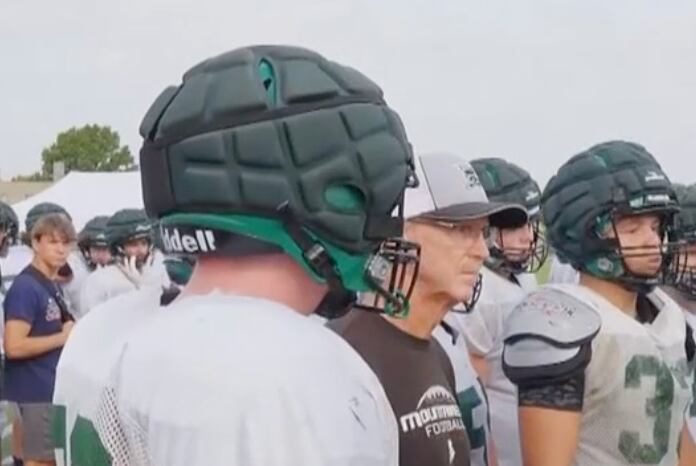
Springfield, Mo. – Across the Ozarks, high school football practices are seeing a new sight: soft‑shell foam covers, known as Guardian Caps, strapped over traditional hard plastic helmets. The caps are marketed to absorb impact and lessen blunt‑force head trauma, but local coaches, medical specialists, and school administrators are split on whether the gear truly improves safety for student‑athletes.
Coaches report perceived benefits
At Nixa High School, head coach John Perry says the decision to purchase Guardian Caps was driven by more than a decade of personal observation. “At all costs, protect the head,” Perry said. “Over the past 12 years of wearing them, I have seen a substantial decrease in the number of concussions that we’ve had. I had lived through the benefits of having it on, and I didn’t see the negative.”
Mount Vernon’s coach and athletic director Tom Cox adds that the foam layer also cushions collisions between helmets and teammates’ hands, arms or legs during full‑contact drills. “When they get hit with a helmet during a game, or an arm or a leg or something, then you’re talking about a less severe injury than it could have been without that,” Cox explained. He notes that the National Football League mandates Guardian Caps for certain position groups in preseason practices and reported a 53% drop in concussions among those groups.
Medical community urges caution
Despite the NFL’s data, brain‑injury specialist Dr. Ross Zafonte cautions that high school athletes differ significantly from professional players in body mass, neck strength and collision dynamics. He cites a Wisconsin study that compared roughly 1,400 high‑schoolers wearing Guardian Caps with about 1,100 who did not. “It wasn’t a big difference in lower game concussion risk,” Zafonte said, underscoring the limited evidence of a clear safety advantage at the high‑school level.
The Missouri State High School Activities Association (MSHSAA) reflects that uncertainty in its official stance. The Sports Medicine Advisory Committee does not recommend or endorse helmet add‑ons, stating that sports‑related concussions are multifactorial and that effective equipment solutions remain elusive.
Cost considerations for districts
Financial factors also weigh heavily on decisions. Cox recalls the original price of the caps in 2020 was about $41 each, but recent costs have risen to as high as $64 per unit. For smaller or rural districts that must equip 50 to 80 varsity and junior varsity players, the expense can strain athletic budgets and raise equity concerns when families are asked to purchase the gear themselves.
Salem High School’s athletic director and head coach Neal Meyers follows MSHSAA guidance, leaving the choice to individual players and parents. “We’ve got to look at every kid or any kid who cannot maybe afford to purchase something like this, and take it to that level of safety for all kids at that point,” he said, emphasizing the need for broader safety education such as neck‑strengthening exercises and proper tackling techniques.
Looking ahead
As helmet technology continues to evolve and more high‑school collision data become available, coaches say the ongoing dialogue itself signals progress. “It’s a dangerous sport,” Cox noted, “but it has never been safer than it has been right now.” The conversation highlights a community‑wide commitment to protecting young athletes while balancing fiscal responsibility and evidence‑based practice.
Original reporting: KY3 Springfield (local) — read the source article.