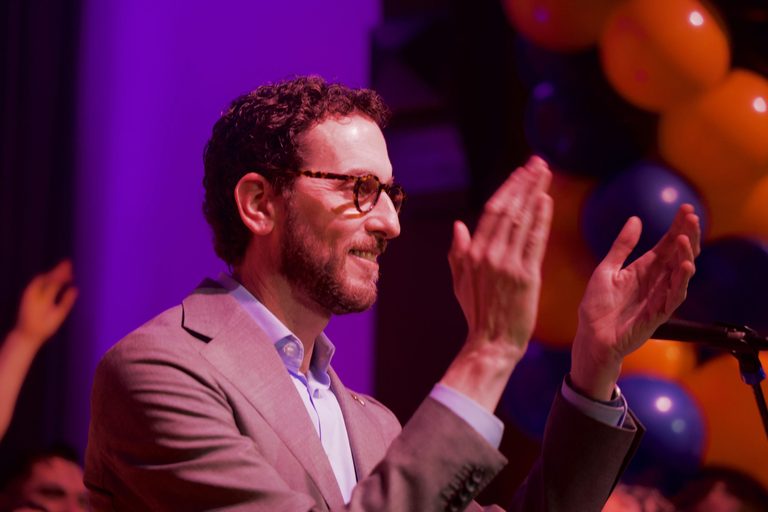
San Francisco voters have chosen state Senator Scott Wiener as their next member of the U.S. House of Representatives, ending the city’s first competitive congressional race in nearly four decades. After the latest vote tally showed Wiener leading by ten points – 55.5% to 44.5% – Supervisor Connie Chan announced her concession at about 5 p.m. Wednesday.
Concession and Reactions
Chan, the District 1 supervisor, said in a statement, “After reviewing the results and the ballots remaining to be counted, while we expect the margin to narrow significantly, we do not have a clear path to victory.” She congratulated Wiener and pledged to keep organizing and holding those in power accountable.
Former Speaker Nancy Pelosi, who endorsed Chan, praised her campaign’s courage and conviction, noting Chan’s deep love for the city. Pelosi also congratulated Wiener and offered her office’s assistance with the transition.
Wiener’s Vision for Congress
Wiener expressed humility and gratitude, saying he is “humbled to carry forward the powerful legacy of this seat.” He cited the “mandate for Democrats in Congress” and outlined his priorities: expanding affordable housing, advancing universal health care, addressing the challenges of artificial intelligence, and holding President Trump and his allies accountable.
In a statement to Mission Local, Wiener thanked Chan for a “spirited and hard‑fought campaign,” acknowledging their disagreements but emphasizing their shared love for San Francisco and the country.
Campaign Dynamics
The race highlighted a stark contrast in campaign resources. Wiener’s supporters outspent Chan’s by at least $10 million, including a $3.5 million super PAC funded largely by San Francisco‑based AI firms Anthropic and OpenAI. Chan attempted to cast Wiener as a “corporate Democrat” backed by the tech industry, but voters appeared persuaded by Wiener’s record on housing legislation and his early work on AI safety.
Both candidates positioned themselves to the left of most national Democrats, supporting Medicare for All and the abolition of ICE. However, they diverged on local issues such as housing policy, land‑use, and transit. Chan drew on her immigrant and working‑class roots, while Wiener presented himself as a moderate urbanist championing YIMBY (Yes‑In‑My‑Backyard) housing reforms.
Local Support Patterns
Chan performed strongly in the Sunset, Outer Richmond, and Mission District, whereas Wiener enjoyed broad citywide support, winning across neighborhoods from Bernal Heights to Haight‑Ashbury. Early results indicated Chan’s coalition included Westside homeowners, Chinese‑American voters, progressives, socialists, and some Republicans, but she struggled to gain traction in the traditional progressive crescent.
Looking Ahead
Wiener will be sworn in on Jan. 3, 2027. He has indicated interest in serving on the House Energy and Commerce Committee as well as the Financial Services Committee, where he hopes to influence national policy on housing, health care, and technology regulation.
Chan’s campaign concluded with a personal note, recalling her mother’s immigrant journey and expressing hope that “someone who speaks with an accent can be a voice for working people.” The race underscores San Francisco’s evolving political landscape and sets the stage for the city’s representation in a closely divided Congress.
Original reporting: Mission Local — read the source article.