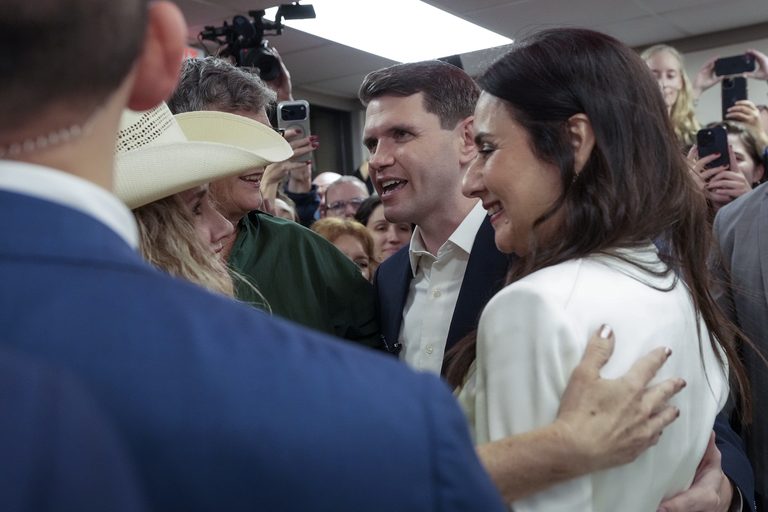
Tuesday’s 2026 midterm election saw a historic surge in voter participation across Texas, with 9.8 million ballots cast – the most for any Texas midterm since at least 1970. While the turnout percentage (51.6% of registered voters) fell short of the 53% achieved in 2018, it still exceeded the 2022 midterm level and helped Democrats capture statewide offices for the first time in decades.
Turnout numbers and trends
The Texas Secretary of State reports that 19 million Texans were registered to vote, about 418,000 more than in 2024. Of those, just over half – 51.6% – voted on Tuesday. This marks an improvement over the 2022 midterm, when turnout was lower, but it remains below the 61.2% turnout recorded in the 2022 general election.
Across the state, every geographic region saw higher turnout than in 2022. Border counties experienced the biggest jump, with turnout rising more than eight percentage points. Urban and suburban counties such as Collin, Denton and Fort Bend added roughly 4.7 points, while rural areas – the most reliably Republican part of Texas – saw a modest increase of 1.4 points.
Democratic gains tied to turnout spikes
The surge in participation translated directly into Democratic victories. Majority‑Hispanic counties along the Texas‑Mexico border – Starr, Zapata, Maverick, Hidalgo and Webb – swung upward of 38 points toward Democrats, despite having supported President Donald Trump strongly in 2024.
In the suburbs, Democrats narrowed the gap dramatically. In 2018, Senator Ted Cruz led these counties by about 19 points. This year, Democratic Senate candidate James Talarico edged out a win by less than half a point in the same areas, reflecting a 19‑point swing toward the left compared with the 2018 Senate race.
Rural counties, while still favoring Republicans, showed a reduced margin. In 2018, Cruz won rural counties by 54.4 points; Governor‑candidate Greg Paxton’s 2024 margin was about 45 points, indicating a narrowing but still substantial Republican advantage.
What the numbers mean for Texas politics
Analysts note that the Democratic sweep was driven more by the pattern of turnout than by a record‑breaking voter surge. “It’s not as though this was a wildly high turnout election,” said Joshua Blank, director of research for the Texas Politics Project. “The nature of the turnout obviously favored Democrats overwhelmingly.”
Counties that voted for President Trump by less than 20 points in 2024, as well as those that former Vice President Kamala Harris carried, saw the greatest increases in participation. Even some counties where Trump won by 20 to 70 points experienced higher turnout, suggesting a broader mobilization of voters across the political spectrum.
Looking ahead
With 169 counties reporting higher ballot counts and 79 showing declines, the overall picture is one of expanding voter engagement in the areas that matter most for statewide outcomes. The data underscores the importance of outreach in border and urban regions, where demographic shifts and increased civic participation are reshaping Texas’s political landscape.
As the state prepares for the next election cycle, both parties will likely focus on sustaining the momentum in these high‑growth counties while addressing the modest gains in rural areas.
Original reporting: Texas Tribune (HLL/CB) — read the source article.