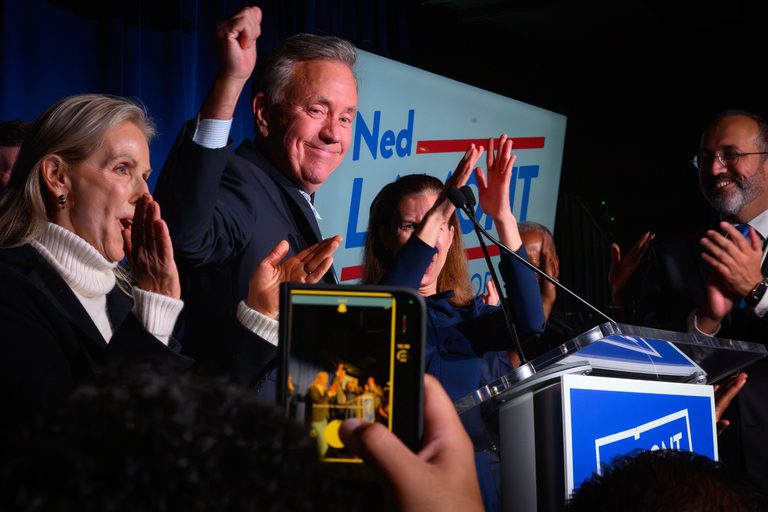
Connecticut’s November election delivered a clear victory for incumbent Governor Ned Lamont, who secured a third term with 58.8% of the vote (723,657 votes) against Republican challenger State Senator Ryan Fazio, who earned 41.2% (506,170 votes). The result was announced at a post‑election news conference held at the state capitol, where Lamont thanked voters for their confidence and outlined his priorities for the next four years.
Lamont’s Record and Future Agenda
First elected in 2018, Lamont has guided Connecticut through the early stages of the COVID‑19 pandemic and has consistently championed policies aimed at strengthening families. Notable achievements include signing the state’s Paid Family and Medical Leave program into law and codifying abortion protections ahead of the U.S. Supreme Court’s decision.
During his tenure, Lamont also opposed the Trump administration’s attempt to halt the Revolution Wind offshore energy project, expanded the TRUST Act to protect immigrants, and worked to safeguard SNAP benefits for Connecticut families. These actions reflect his commitment to both economic security and individual liberty.
Fazio’s Platform and Campaign Themes
Republican candidate Ryan Fazio, a first‑time gubernatorial contender, campaigned on reducing the state income‑tax rate, eliminating hidden taxes on energy, and expanding reliable energy supply. He also proposed reforms to the 2020 Police Accountability bill and a plan to increase housing availability.
Both candidates emphasized affordability as a central issue, acknowledging the impact of rising housing costs and energy prices on Connecticut residents. While Lamont highlighted his experience and existing programs, Fazio argued that tax cuts and deregulation would provide immediate relief to families.
Primary Challenge and Party Unity
Lamont faced a primary challenge from progressive Democrat State Representative Josh Elliott of Hamden, winning the Democratic primary in August. The victory solidified party unity heading into the general election, allowing Lamont to focus on broader state concerns rather than intra‑party disputes.
Implications for Connecticut
The election outcome suggests continued support for Lamont’s approach to social safety programs, immigrant protections, and renewable energy development. With the governor’s office remaining under Democratic control, Connecticut is likely to maintain its trajectory on paid family leave, SNAP assistance, and offshore wind initiatives.
Fazio’s emphasis on tax reduction and energy cost cuts may influence future legislative debates, especially as the state legislature considers budget priorities and potential reforms to the tax code. Residents can expect ongoing discussions around housing policy, as both campaigns pledged to address the state’s housing shortage.
Looking Ahead
Governor Lamont’s administration will now shift from campaign mode to governance, with a focus on delivering on promises made during the race. The upcoming legislative session will be critical for advancing his agenda on affordability, energy, and family‑centered policies.
Connecticut voters have spoken, and the state’s political landscape will continue to reflect the balance between progressive social programs and conservative calls for fiscal restraint.
Original reporting: NBC Connecticut — read the source article.