Greenville County voters made clear distinctions in the November 2026 general election. Four of the five penny sales‑tax referendums put before the electorate were approved, but the countywide transportation tax failed.
Municipal approvals
Residents of Greenville, Simpsonville, Mauldin and Travelers Rest each voted to adopt a 1% municipal sales tax. This marks the first time in South Carolina history that cities have been granted the authority to levy a sales tax, a power previously reserved for counties.
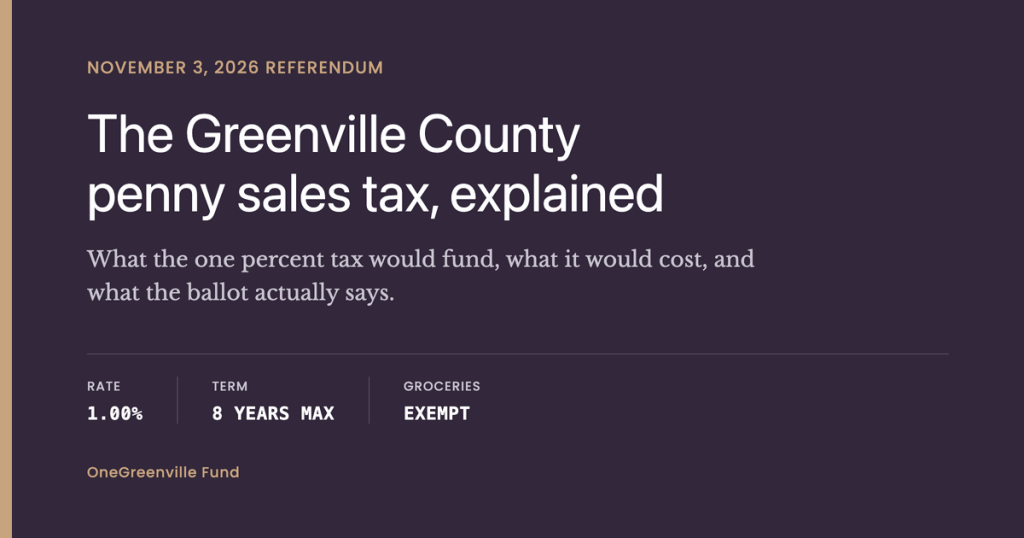
The new taxes will take effect on May 1, 2027, and will remain in place for eight years. The tax adds an extra penny to every dollar spent on eligible purchases, while exempting most groceries, prescription medicines and gasoline. Each city expects the tax to generate roughly $1.1 billion over the eight‑year period, funding road repairs, infrastructure projects and capital improvements. Additionally, 20% of the revenue will be credited back to owner‑occupied homeowners on their property‑tax bills.
County referendum rejected
Greenville County’s proposal for a local sales and use tax, intended to raise $1.1 billion for transportation, road improvements, land preservation and public transit, was defeated. The final tally showed 51.51% of voters opposed the measure, a result nearly identical to the 51.48% defeat of a similar county capital‑projects tax in 2024.
This is the fourth time since 2002 that Greenville County has failed to pass a local sales‑tax referendum, underscoring the electorate’s cautious approach to expanding tax burdens.
Implications for the region
With the municipal taxes moving forward, the four cities will have new revenue streams to address long‑standing infrastructure needs. The county’s loss, however, means that the broader transportation plan will need to be re‑evaluated, potentially relying on state funding or alternative financing mechanisms.
Local officials have emphasized that the municipal taxes will be used responsibly, focusing on projects that directly benefit residents’ daily commutes and safety. The county’s leadership has pledged to revisit the transportation funding strategy in upcoming budget cycles.
What voters need to know
Homeowners in the four cities can expect a modest increase in sales‑tax costs on everyday purchases, offset partially by the promised property‑tax credit. Residents of the rest of Greenville County will see no change to their sales‑tax rates at this time.
Election officials have reminded voters that the new municipal taxes will be collected automatically by retailers and that the credit will appear on property‑tax statements beginning in 2028.
Original reporting: Greenville Journal — read the source article.