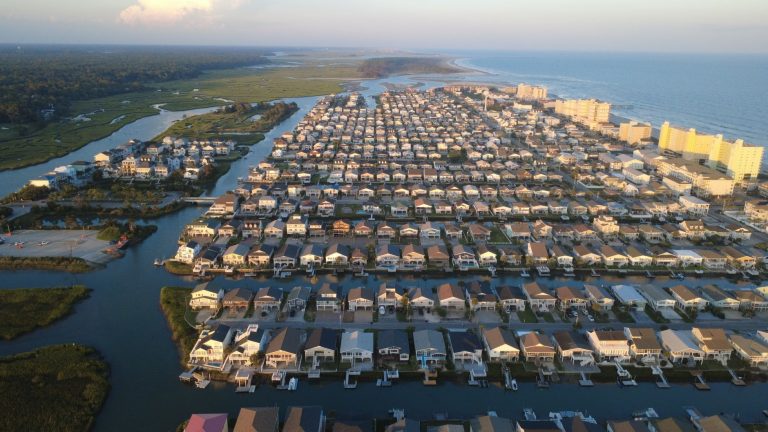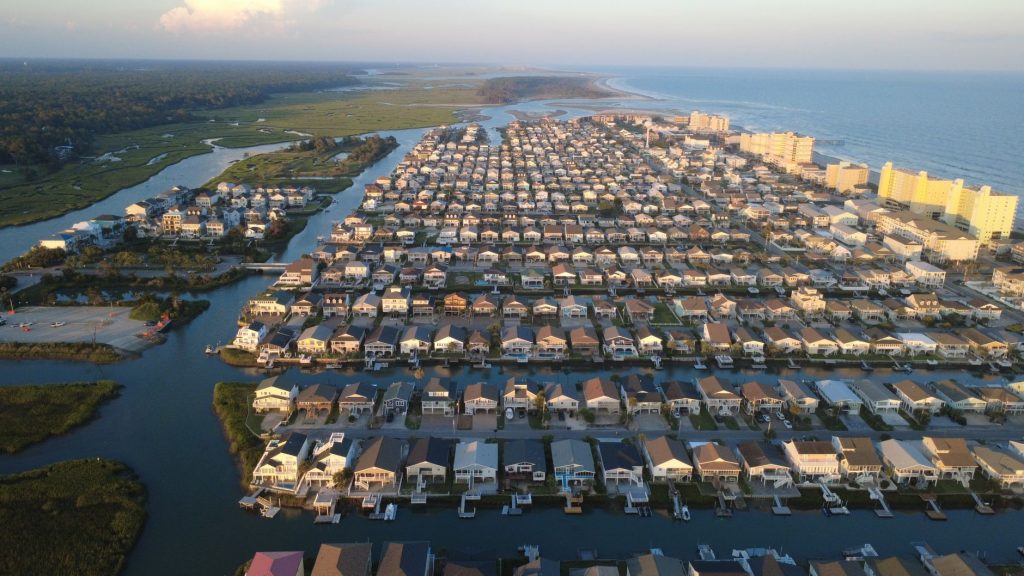
The Cherry Grove boat ramp on 48th Avenue North in North Myrtle Beach sits at the edge of a tidal creek system that drains roughly four square miles of salt marsh. When the tide drops to its lowest point — usually somewhere between one and three feet below mean low water during a new or full moon — the mud flats along the creek bends expose themselves in ways that make crabbing almost embarrassingly productive. Locals have been working this spot for generations, but it doesn’t take much to figure out why: the blue crabs move with the water, and this particular stretch of creek funnels them into predictable pockets.
The ramp itself is public, managed by the city of North Myrtle Beach, and parking is free. There’s a modest wooden dock running alongside the ramp where crabbers line up their drop lines and folding chairs, usually by mid-morning on a falling tide. The setup cost is minimal — a chicken neck or a fish head on a string with a small weight, a long-handled net, and a bucket. Soft-shell crab season runs roughly from April through October, but hard crabs are catchable well into November on warm years. A South Carolina saltwater fishing license is required; it runs $11 for state residents and $35 for non-residents annually, available online through the SCDNR website.
The productive window is specific: start dropping lines about two hours before low tide and keep at it for two hours after. During that four-hour stretch, water movement slows enough that the crabs feed rather than travel, and they’re more likely to hold onto the bait long enough to net. Early morning tends to outperform afternoon, partly because boat traffic on the creek is lighter and partly because the crabs are more active in cooler water temperatures. Weekend afternoons in summer bring a lot of personal watercraft through the channel, which scatters the crabs and frustrates everyone.
The neighborhood around the ramp is old-school Cherry Grove — small beach cottages, a couple of bait shops nearby on Sea Mountain Highway, and the kind of foot traffic that skews toward families with kids rather than resort crowds. Hucks Lowcountry Table used to be the standard post-crabbing dinner recommendation in the area, but serious crabbers typically take their catch home and steam it themselves. A dozen live blue crabs, a pot of Old Bay water, and a newspaper-covered table is a Lowcountry tradition that no restaurant quite replicates.
The only real equipment upgrade worth considering is a crab trap — the wire box style baited and left for an hour or more. These require the same license and are limited to five per person under state regulations. They’re more efficient than hand lines but less social, and the ramp crowd tends toward the hand-line method anyway, which keeps the dock lively and gives children something to watch and do.
High summer Saturdays can pack the dock shoulder to shoulder, so weekday mornings in May or September offer the same crabbing with considerably less company. The creek is also worth watching for bottlenose dolphins working the same tidal flats — they show up regularly on dropping tides and have been spotted rolling through the shallows less than forty yards from the dock. It’s not the kind of thing that gets put on a flyer, but regulars at the ramp treat it as routine.