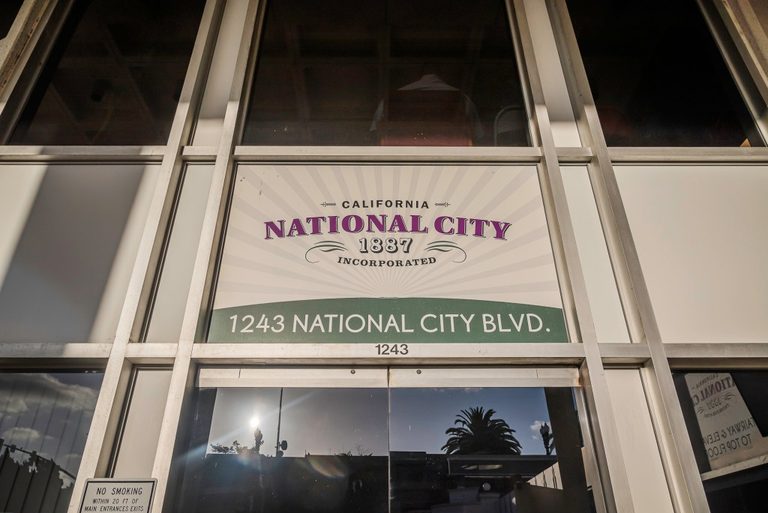
National City’s business community took the lead on a budget solution Tuesday, voting unanimously to forward a modest tax‑increase proposal to the City Council and, ultimately, to voters. The plan would replace the city’s complex, tiered business‑license tax with a flat 0.07 percent levy on total sales, capping each business’s annual bill at $30,000. At that rate, the city would collect an estimated $2.75 million in additional revenue each year, a sharp reduction from the $7.5 million originally sought.
Why the reduced figure matters
Committee members argue that the smaller amount still provides needed cash while preserving National City’s reputation as a business‑friendly environment. “This enables the city to elevate its revenue while making National City more competitive,” said Jenifer Ball, vice president of Ball Auto Group, one of the region’s largest car dealers. “We are ready to help the city, but we don’t believe it’s the businesses’ job to shoulder the entire deficit.”
Background on the original proposal
In August, the City Council rejected a $7.5 million business‑license tax increase after strong opposition from the Chamber of Commerce and a cross‑section of local firms. The original plan grouped businesses into categories with varying rates, a structure business leaders called overly burdensome and likely to hurt small enterprises.
Facing a $13 million budget shortfall, city staff had initially pushed the larger increase to balance the books. When the council voted 3‑2 to form a business‑leader committee, the goal was to craft an alternative that could gain broader support.
Committee’s alternative and council reaction
The committee’s proposal was developed over several months in collaboration with City Manager Doug Schulze and Economic Development Director Pedro Garcia. While Schulze and Garcia later suggested a different plan that would have generated $5.8 million, business leaders rejected that figure as too high and voted for their own, more modest proposal.
City Councilmember Marcus Bush, a mayoral candidate who originally advocated for business input, praised the plan as “a huge step forward,” noting that the original ballot measure would likely have failed and damaged the city’s relationship with its business community. In contrast, councilmember Jose Rodriguez—also running for mayor and a supporter of the original increase—called the proposal “significantly less than what the city continues to need” and warned that it may not fully address the budget gap.
Potential voter involvement
Any tax increase in National City requires voter approval. Business leaders anticipate that their proposal could appear on the November 17 ballot if the council moves it forward. Rodriguez has already begun gathering signatures for a separate citizens’ initiative that would raise roughly $10.5 million by targeting large businesses such as Walmart and local auto dealers. That effort aims for a 2028 ballot, but Rodriguez indicated he would discuss with his coalition whether to withdraw the initiative in favor of the business‑leader plan.
Broader fiscal perspective
Committee members emphasized that tax policy alone will not solve the city’s financial challenges. They called for operational efficiencies, cost‑saving measures, and better management of city services. “We need to be fair to the businesses here,” said property developer Joel Tubao, who helped create the Market on 8th food hall. “If Rodriguez’s larger initiative passes, we could see many businesses shuttering.”
Despite differing opinions, the proposal ranks second only to Del Mar in San Diego County for the size of a city’s business tax when measured per resident, according to the committee’s calculations.
Next steps
City Manager Schulze and Economic Development Director Garcia said they will present the business leaders’ proposal to the council for a vote on November 17. If approved, the measure will move to the ballot, where residents will decide whether the modest increase is sufficient to help close National City’s deficit while maintaining a climate that encourages growth and job creation.
Original reporting: Voice of San Diego — read the source article.