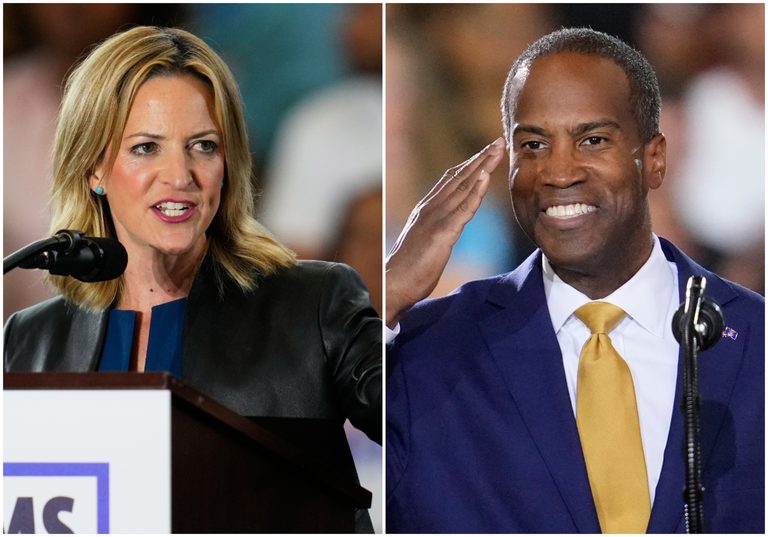
LANSING, Mich. – With polls closed across much of the state, officials have begun tallying votes in the contest to become Michigan’s next governor. The race pits Democrat Jocelyn Benson, Michigan Secretary of State, against Republican former congressman John James, a former Army officer seeking to become the state’s first Black governor.
Candidate platforms
Benson’s campaign centers on lowering costs for taxpayers, raising wages, and rooting out corruption. She argues her record as secretary demonstrates an ability to run government efficiently. “The heart of our campaign is costs down, wages up, and fighting for the people of Michigan,” she told supporters on a bus tour, adding she will work for “you and the people of this state, not the highest bidder, not President Trump.”
James frames his candidacy as a call for change after eight years of Democratic leadership. He urges voters to reject “just getting by” and to embrace what he calls the nation’s “birthright” of prosperity. “We’re not going to accept getting by because the American dream is our birthright, and greatness is in our DNA,” James said after a debate.
Impact of national politics
The gubernatorial contest unfolds under the shadow of a high‑spending U.S. Senate race and the continued presence of President Donald Trump in Michigan politics. While Trump’s disapproval rating in the state hovers near 60 %, he has urged voters to “vote like I’m on the ballot,” a statement that has drawn criticism from Democratic voters and praise from some Republican supporters.
James has courted Trump’s endorsement, appearing alongside the president at rallies. Critics, including local Democratic activists, argue that the Trump connection could distract from Michigan‑specific issues. “We’re losing our kids, and y’all are focusing on some dude in Washington,” James told reporters after a debate, attempting to refocus the conversation on state concerns.
Local voter perspectives
Voters across the state shared their reasons for backing each candidate. In Traverse City, 34‑year‑old architect Jesus Villa split his ticket, supporting James for governor and Democrat Abdul El‑Sayed for U.S. Senate, saying he views government “as a business that must be managed.” In Monroe County, former Trump voters Timothy and Consuelo Cousino switched to Benson, citing rising prices and a perceived increase in national hostility.
Mike Haines, a 57‑year‑old business owner from Warren, praised James for his “straight‑shooting” approach, especially during the COVID‑19 pandemic, contrasting it with his view of the current administration’s handling of the crisis.
Campaign financing
The race has seen a stark spending gap. Early October data showed Benson holding roughly a 12‑to‑1 advantage in advertising dollars after the Republican Governors Association pulled its ad reservations. However, the Michigan Republican Party later poured millions into James’s campaign, aided by donations from the DeVos family, Elon Musk, and outside super‑PACs. This influx raised questions about compliance with state campaign‑finance limits, prompting a complaint from the Michigan Democratic Party that remains unresolved.
Ad‑tracking firm AdImpact reported nearly $41 million spent on broadcast ads in the general election, with 56 % favoring Benson. Including primary spending by former GOP contender Perry Johnson, total expenditures approached $74 million.
What’s at stake
The winner will inherit a state grappling with struggling schools, stagnant population growth, and an economy lagging behind neighboring states. Both candidates propose reforms: Benson advocates a new school‑funding model and tax relief, while James pushes broader tax cuts and a regulatory overhaul.
As Michigan voters head to the polls, the race underscores the broader national debate over the direction of state governance and the lingering influence of President Trump on local elections.
Original reporting: BridgeDetroit — read the source article.