Chicago’s City Council has placed a non‑binding referendum on the November ballot that would let voters decide whether the city should develop a permanent, publicly owned festival and outdoor‑event campus. The measure, introduced by Alderman Nicole Lee of the 11th Ward and co‑sponsored by Alderman Brian Hopkins of the 2nd Ward, would allow a dedicated site for concerts, cultural festivals, food and beverage events, sporting exhibitions, community celebrations and other large gatherings.
Why the proposal matters
Supporters argue that a fixed venue could reduce the yearly hassle of erecting temporary stages, drainage systems and bleachers in parks such as Grant Park, where Lollapalooza, Sueños and the Taste of Chicago draw tens of thousands of attendees. Alderman Hopkins said the city’s current “stop‑and‑go” approach forces residents to repeatedly endure street closures and park disruptions.
“Rather than act surprised every year that we’re going to have festivals and events downtown and then set up temporary structures, I thought it might be a good idea to see if the citizens of Chicago—especially those who live downtown—would be supportive of making something a bit more permanent,” Hopkins told Block Club.
Community concerns and alternatives
Neighborhood groups in North Lawndale have long opposed the use of Douglass Park for Riot Fest, citing traffic, noise and the park’s proximity to two hospitals. Advocacy organization Únete La Villita, which works on equitable development in Little Village, North Lawndale and Humboldt Park, backs the idea of a city‑owned fairground that would keep large festivals off neighborhood parks.
Organizer Sara Heymann explained, “Douglass Park is not a suitable space for a big fest like this because it’s next to two hospitals. Chicagoans love their parks, but they also love music festivals. We need a place that is both accessible and fun without destroying neighborhood parks for a few days.”
Looking to Milwaukee for a model
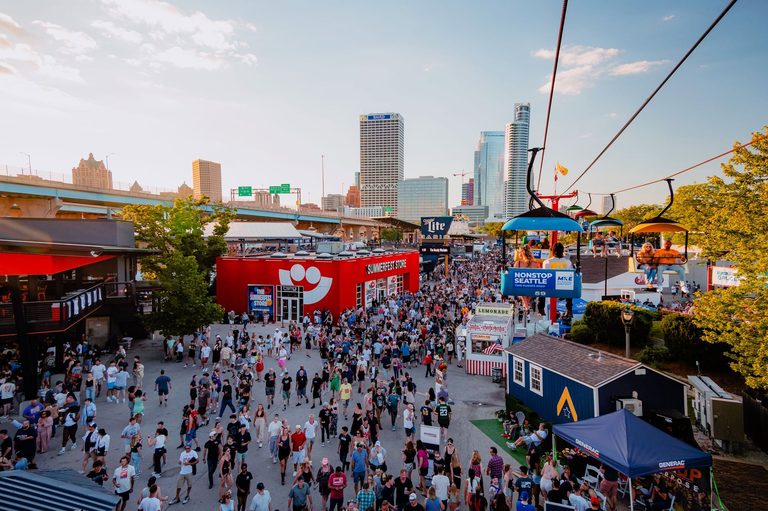
Heymann points to Milwaukee’s Henry Maier Festival Park, a 75‑acre city‑owned site that hosts Summerfest, one of the world’s largest music festivals. Operated by the nonprofit Milwaukee World Festival, Inc., the park includes vendor space, multiple stages and a 23,000‑seat amphitheater.
“A publicly owned festival ground similar to Milwaukee would give Chicagoans a say over how it’s run and ensure profits stay in the community,” she said.
Potential sites and next steps
If the resolution passes, the council will move forward with community outreach to identify suitable locations. Alderman Hopkins mentioned Lower Hutchinson Field at the southern edge of Grant Park as a possible site, while Heymann suggested repurposing Soldier Field or the former Damen Silos area slated for the South Loop megadevelopment known as The 78.
Any eventual venue would need to be publicly owned to avoid the pitfalls of privately operated spaces like the Huntington Bank Pavilion at Northerly Island, which is run by Live Nation. Heymann stressed, “We need to ensure that a festival space for the city is not controlled by a private corporation; it must be publicly owned so Chicagoans have a say over how it’s run and what it looks like, and then profit from it.”
Public reaction
Local writers note both benefits and drawbacks. Chicago Reader columnist Leor Galil argued that a dedicated venue could help independent promoters avoid the soaring costs of building, insuring and dismantling temporary stages. Conversely, a longtime festival‑goer expressed concern that consolidating events in one location could strip away the neighborhood charm that makes Chicago’s festivals “incredibly life‑enhancing.”
“I love exploring different parks and neighborhoods through festivals,” the resident said. “Giving up that variety for a single, generic site would erase a lot of cultural flavor.”
What voters need to know
The referendum is non‑binding; a “yes” vote would simply signal public support and prompt the council to begin feasibility studies, community input sessions and potential site selection. The measure will appear on the ballot alongside other local questions in the November midterm election.
Chicagoans who wish to weigh in should review the resolution text, consider the impact on neighborhood parks, and think about how a permanent festival ground could balance economic development with the preservation of community spaces.
Original reporting: Block Club Chicago — read the source article.