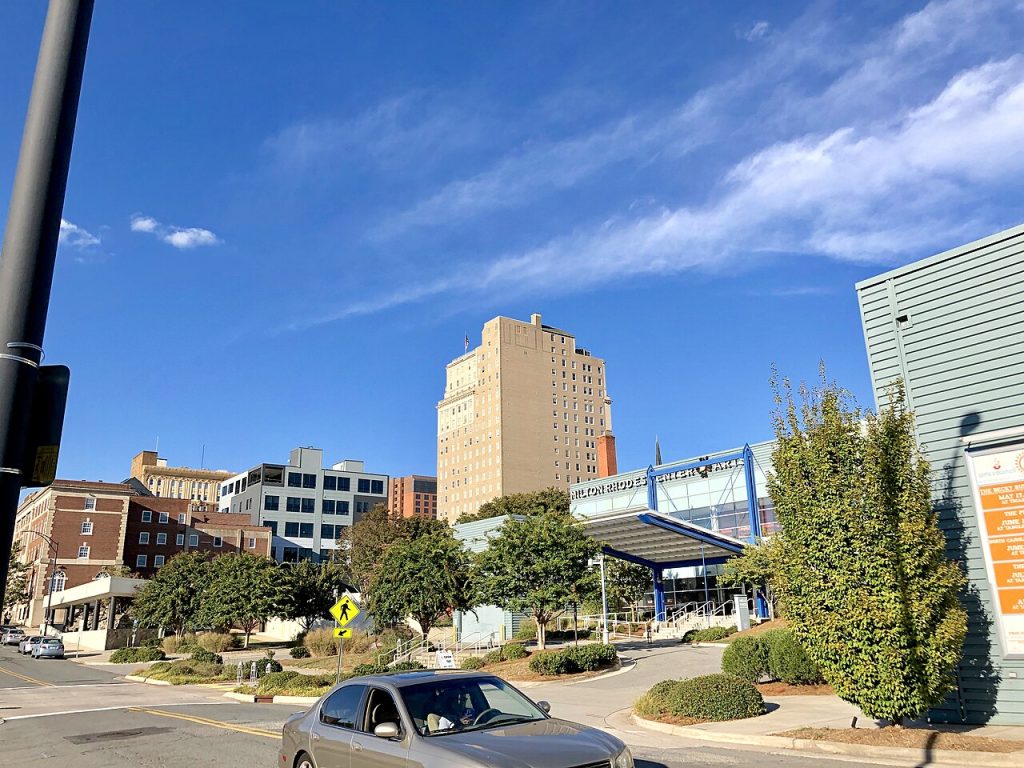
The Milton Rhodes Center for the Arts sits on West Fourth Street in the Arts District, and on any given weekday evening, something is happening inside it. A jazz quartet rehearsing in one of the upper studios. A photography exhibit going up in the main gallery. A small audience filing into the black box theater for a show that sold out two weeks ago.
The building was once the Adams-Mark Hotel — a fact you can still read in the bones of the lobby, which feels bigger than a community arts center needs to be. That extra space works in its favor. The galleries along the main corridor get natural light from the wide front windows, and exhibitions rotate often enough that regulars have reason to come back monthly. The work shown tends to be regional: painters and photographers from across the Piedmont, ceramicists from nearby guilds, the occasional student showcase from one of the local university programs.
The theater downstairs is where the building really earns its reputation. The Hanesbrands Theatre, which the Rhodes Center manages, sits a few blocks away and handles larger productions — Broadway touring shows, major concerts — but the black box space at Rhodes handles the work that requires closer attention. Intimate productions by Triad Stage and other local companies cycle through the season, and the sightlines from even the back rows are good enough that there’s no bad seat. Tickets for most shows run between eighteen and forty dollars depending on the company and the run, with discounts for students and seniors that actually matter rather than being ceremonial.
On a typical Friday night, the crowd skews older but not exclusively so. There are Winston-Salem School of the Arts students who come because it’s free with an ID. There are couples who drive in from Clemmons or Kernersville because nothing closer offers this. The lobby between acts has the low hum of people who came to see the thing, not to be seen at it.
Parking on West Fourth is street-level and free after six, though the blocks nearest the building fill early on performance nights. The Arts District Parking Deck on Trade Street is a reliable backup and only a short walk.
The center also runs studio rentals and a modest residency program for working artists. That operational layer is less visible to a casual visitor, but it explains why the building feels active in a way that arts centers in smaller cities sometimes don’t — there are people working in it during the day, not just staffing it.
The gallery hours run Tuesday through Saturday, ten to five, with extended hours on performance evenings. Admission to the galleries is free. The coffee station in the lobby is not glamorous but it is functional, which is about right for a place that prioritizes what’s on the walls and on the stage over the experience of buying a drink.
What the Milton Rhodes Center does well is keep the door open. Not just physically — though the programming calendar is dense enough that any month offers several entry points — but in terms of expectation. Nobody is required to arrive knowing much. The work tends to explain itself, or at least to reward patience.