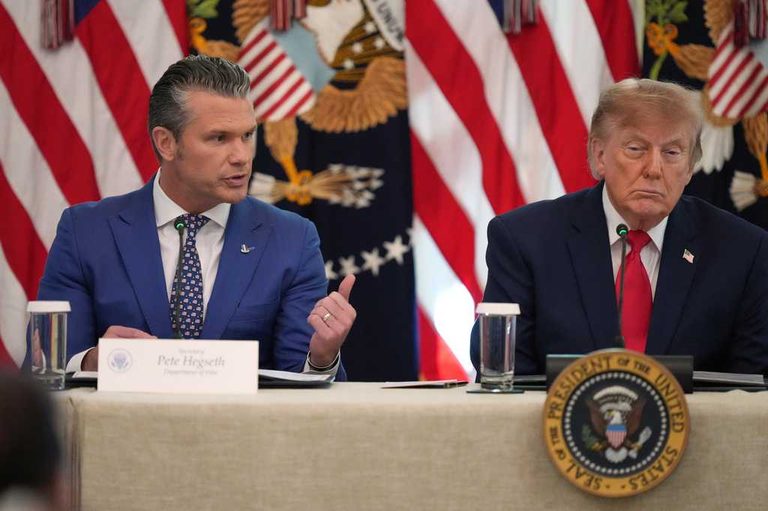
The Pentagon reported on Oct. 16 that the Iran war has cost American taxpayers an estimated $47.1 billion, up $3.5 billion since early September. The figure, supplied by U.S. Central Command, reflects expenses for munitions, operations, equipment losses and service‑member casualties.
Administration’s Funding Request
President Trump’s administration is responding by seeking congressional approval for a historic $1.5 trillion defense budget, which includes a dedicated $95 billion package to cover the Iran war and related priorities. The White House argues that this funding is essential to sustain military readiness, replace depleted missile‑interceptor stockpiles, and support the troops already deployed in the region.
Breakdown of War Costs
According to the latest estimate, about $29 billion is allocated to replacing munitions, primarily defensive missile interceptors such as Patriot and THAAD systems. Operations account for roughly $11.9 billion, while equipment losses add another $6 billion. Service‑specific costs include $7.6 billion for the Air Force, over $2 billion for the Army, and $1.45 billion for the Navy—a decrease from the $2.2 billion reported in early September.
Congressional Reaction and Poll Findings
A recent AP‑NORC poll shows that a majority of voters want Congress to prioritize ending the conflict. The poll, which surveyed a balanced sample of likely voters, indicates growing public concern over the war’s financial and human toll. However, the administration emphasizes that a decisive military posture is necessary to deter further aggression and protect American lives.
Critics and Counterpoints
Senate Minority Leader Chuck Schumer (D‑NY) condemned the war, saying, “Trump and his ego led us into this war with no plan, no authority, and no exit strategy.” While the criticism reflects a partisan viewpoint, the administration maintains that the current strategy is guided by national‑security imperatives and the need to counter Iran’s hostile actions.
Impact on Midterm Elections
The rising cost of the war has become a focal point in the upcoming midterm elections. Voters will decide which party controls Congress during the President’s final two years in office. Republicans argue that a strong defense budget safeguards the nation, whereas Democrats are pushing legislation to end the war and reduce spending.
Operational Details
The Pentagon’s tally lists 21 service members killed and 865 wounded, including 18 deaths directly attributable to Iranian strikes, aircraft crashes, or drone disposal incidents. Damage to U.S. bases across the Middle East—reported by the Pentagon inspector general—has not been included in the $47.1 billion figure, suggesting the total cost could be higher.
Looking Ahead
President Trump has indicated that new strikes on Iran remain an option after the midterms, and additional forces, including a third aircraft carrier, are moving toward the region. The administration also reduced staffing at several U.S. embassies after intelligence indicated heightened Iranian targeting of American personnel.
As the war’s financial burden grows, the Trump administration continues to advocate for robust funding to ensure military readiness while urging Congress to support the proposed budget package.
Original reporting: WPBF West Palm Beach — read the source article.