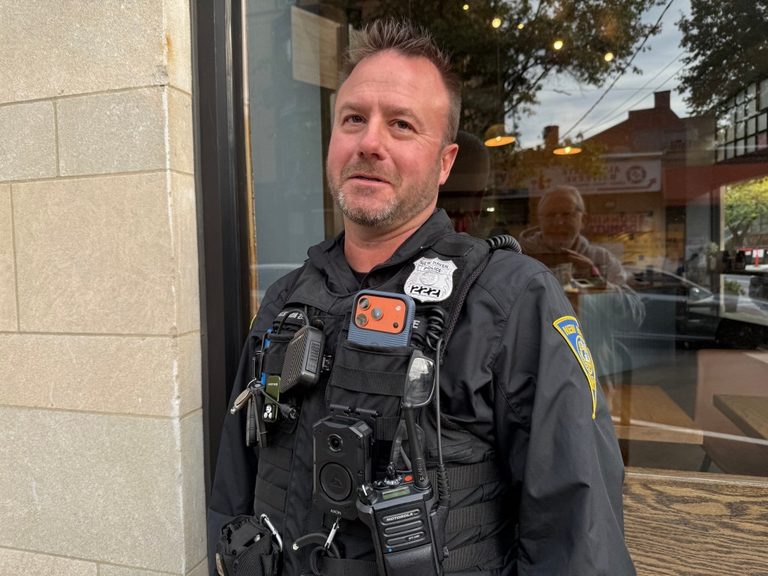
New Haven – Officer Eric Hallstrom, a 55‑year‑old veteran with 30 years of patrol experience, is proving that seasoned “lateral” hires are a vital asset to the city’s police force. In his first year with the New Haven Police Department (NHPD), Hallstrom has taken on both a patrol role and a mentorship role, helping younger officers navigate difficult calls.
De‑escalating a mental‑health emergency
During a recent call on the Hill, Hallstrom and rookie Officer Kevin Roman responded to a distressed mother who reported her adult daughter was refusing medication, talking to herself, and appearing unsafe. Hallstrom asked Roman how they should proceed, and the two officers entered the home together. Hallstrom’s calm, patient approach gave the daughter a choice: go to the hospital voluntarily or be taken there against her will.
Before Hallstrom could ask the question, a younger officer—half his age—offered the same choice, and the daughter elected to go to the hospital on her own. She left willingly in an ambulance, and the situation was resolved without force.
Mentorship on the beat
Hallstrom’s influence extends beyond that single incident. As a field training officer (FTO) and Emergency Vehicle Operation Course (EVOC) trainer, he provides formal instruction to new recruits. Informally, he models how to use tone and body language to avoid escalating tense encounters. Police Chief David Zannelli notes that 80 % of the department’s officers have under five years of service, making Hallstrom’s experience an “extra plus.”
“Sometimes our choice of words or body language will inadvertently escalate when we’re trying to de‑escalate,” Zannelli said. “Someone who’s experienced like Hallstrom understands the nuances and can get somebody the help they need, while younger officers learn from a senior officer.”
Why laterals matter
The city’s recent police contract, approved two years ago, improved pay and benefits, attracting a larger pool of lateral applicants—officers who transfer from other departments. New Haven typically hires two to four laterals each year. Because laterals can hit the street faster under streamlined rules, they fill critical gaps in experience while the department trains new recruits.
Hallstrom’s own career reflects this path. After 24 years with the Hamden Police Department—where he served as a firearms, use‑of‑force, and CPR trainer—he retired in 2025 when Hamden withdrew officer benefits. Rather than retire fully, Hallstrom chose to continue serving, saying, “I still feel I can contribute.” He joined NHPD in November and now patrols the Hill on the 4‑12 p.m. B shift.
Community connections
Beyond policing, Hallstrom engages with local families. He once visited Roberto Clemente School to check on children hanging out after hours, borrowing a kid’s bike and riding around the parking lot—a gesture that earned him the nickname “Dad” among the students. He also advises teens on parental‑trust issues, reminding them that “trust is a hard thing to get back” and encouraging responsible behavior.
Hallstrom’s personal life reflects his commitment to family. He worked the midnight shift for years so he could attend his sons’ daytime activities; his sons, now 20 and 25, serve as paramedic firefighters. He jokes that younger officers often tease him with, “You’re giving dad advice again.”
Looking ahead
Chief Zannelli expects the lateral program to continue strengthening the department. With experienced officers like Hallstrom guiding the next generation, New Haven aims to improve public safety outcomes while fostering a culture of mentorship and respect.
Hallstrom’s story underscores how seasoned veterans can bridge the gap between experience and youthful energy, ensuring that New Haven’s police force remains both effective and compassionate.
Original reporting: New Haven Independent — read the source article.